EMERGE
Program 2026
The EMERGE Festival is not a typical festival where you simply attend a few workshops here and there.
With its track-based structure, it is better described as six parallel seminar-style journeys taking place at the same time.
Below, you will find descriptions of the six tracks.
And yet, there is much more than “just” the tracks:
In the mornings, you can start the day with guided body-based sessions. Throughout the day, there are opportunities to make art. In the evenings, we dance to live music and DJ sets, or gather closely during the poetry night.
You can find the full program further down the page.
>> group is full <<
Track 1
Dancing the political
A Dance Creation Process
read more...
The story, pain, and trauma we carry in our bodies are not just our own; they are shaped by social and political issues, by our family history, and by our roots. In this workshop, we will embody and improvise on social and political themes that you personally care about, using tools I’ve developed throughout my creative process over the years.
We will explore questions such as: what are the layers of my identity — in my dance, and life? And what does it mean to transcend identity, to let go of it, even if just for a moment?
We will research gender identity in our moving body.
As a Palestinian artist, especially in these times, I may also bring examples and references from my homeland.
One of the exercises we might do: embody your collective, embody the “other side,” and then embody both within the same body.
This process can be emotional, but that doesn’t mean you need to be cautious of it. We will create space for these emotions through softness, conversation, and rest. You will never be pushed beyond your limits — we will hold the group together with sensitivity and care, and there will be plenty of joy as well.
Language: English
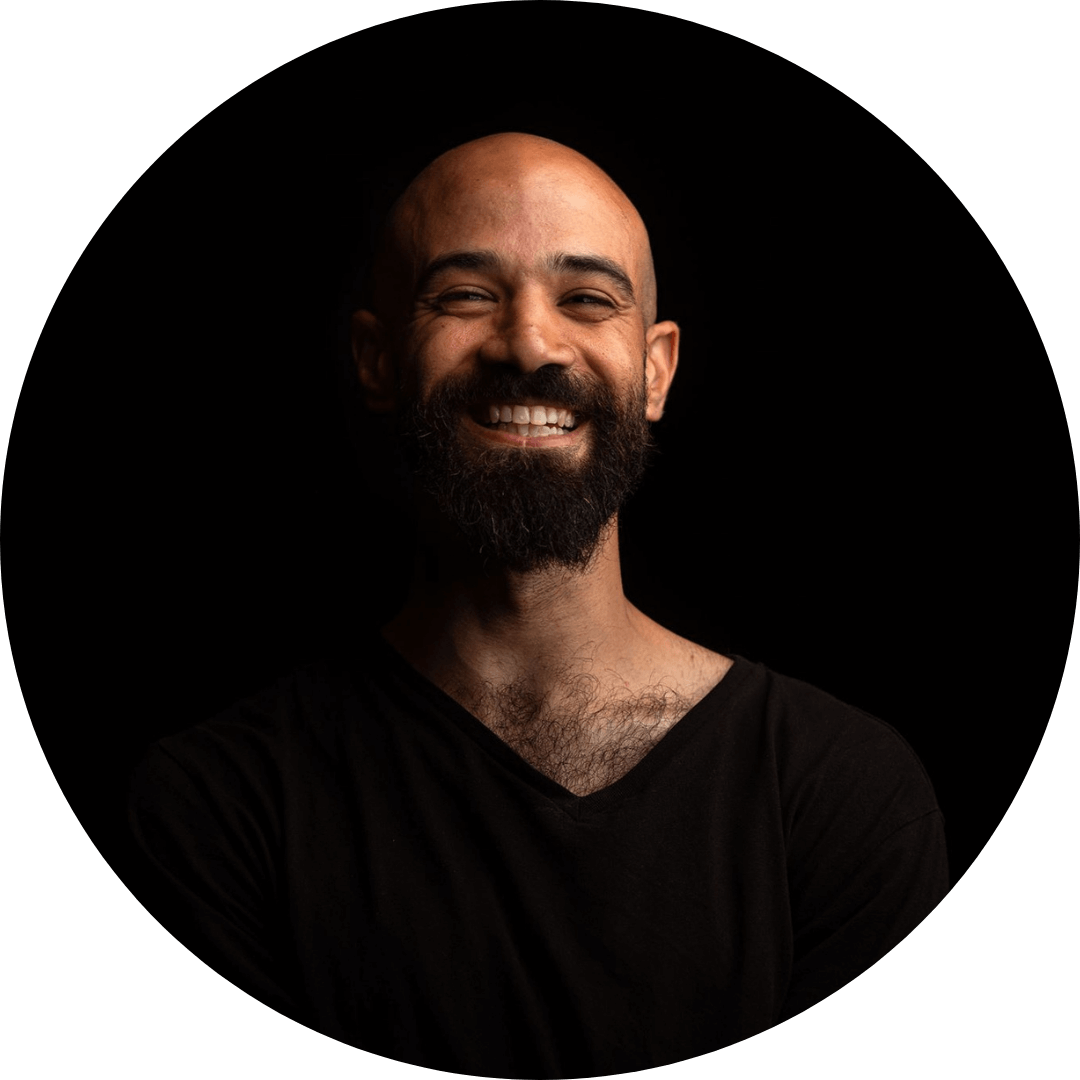
Saed Mansour (he)
read more...
Saed is a freelance Palestinian performance artist, choreographer, dance teacher, and festival producer who was previously in tech. In his work, he aims to create spaces—be it as a performer, teacher, or festival producer—that focus on emotional, communal, and social/political processes.
Saed was born Palestinian with Israeli citizenship (20 percent of the country’s citizens hold this status). His life is political not by choice, but it is rooted deeply in his body and throughout past generations. A big part of his journey of teaching and performing is about dealing with and communicating the wounds carried by generational and ongoing trauma.
>> group is full <<
Track 2
Subliminal Instruments
Create Your Own Manifestation Instrument
read more...
A track between sound laboratory, ritual space, and artistic practice.
Can art be a pathway to freedom?
Can we, through conscious intention and loving presence, create new realities?
And what happens when we begin to understand our dreams as part of a collective act of creation?
Everything is frequency, and it moves within us as a creative force that takes shape through attention, intention, and presence.
From this understanding, we explore different subliminal instruments that weave the fabric of our reality—and learn how to enter into relationship with them.
We work with silence, voice, sound, rhythm, colors, and seemingly ordinary objects, transforming them—through imagination and conscious attention—into powerful sound totems.
In creative jams, we explore collective and individual inner blocks and longings. What habits shape our inner and outer sense of home? Where do we experience limitation—through social structures, fears, or expectations—and where might we find ways to “move through walls”? No prior experience is needed.
Together, we practice trusting our intuition again—and giving it form. You will create your own sound totem: a personal manifestation instrument that combines ritual object and living spell, reminding you of your hidden power in everyday life.
Inspired by methods from The Artist’s Way, the Hermetic principles, and Afro-Indigenous knowledge systems, we look forward to a shared artistic journey.
Language: German
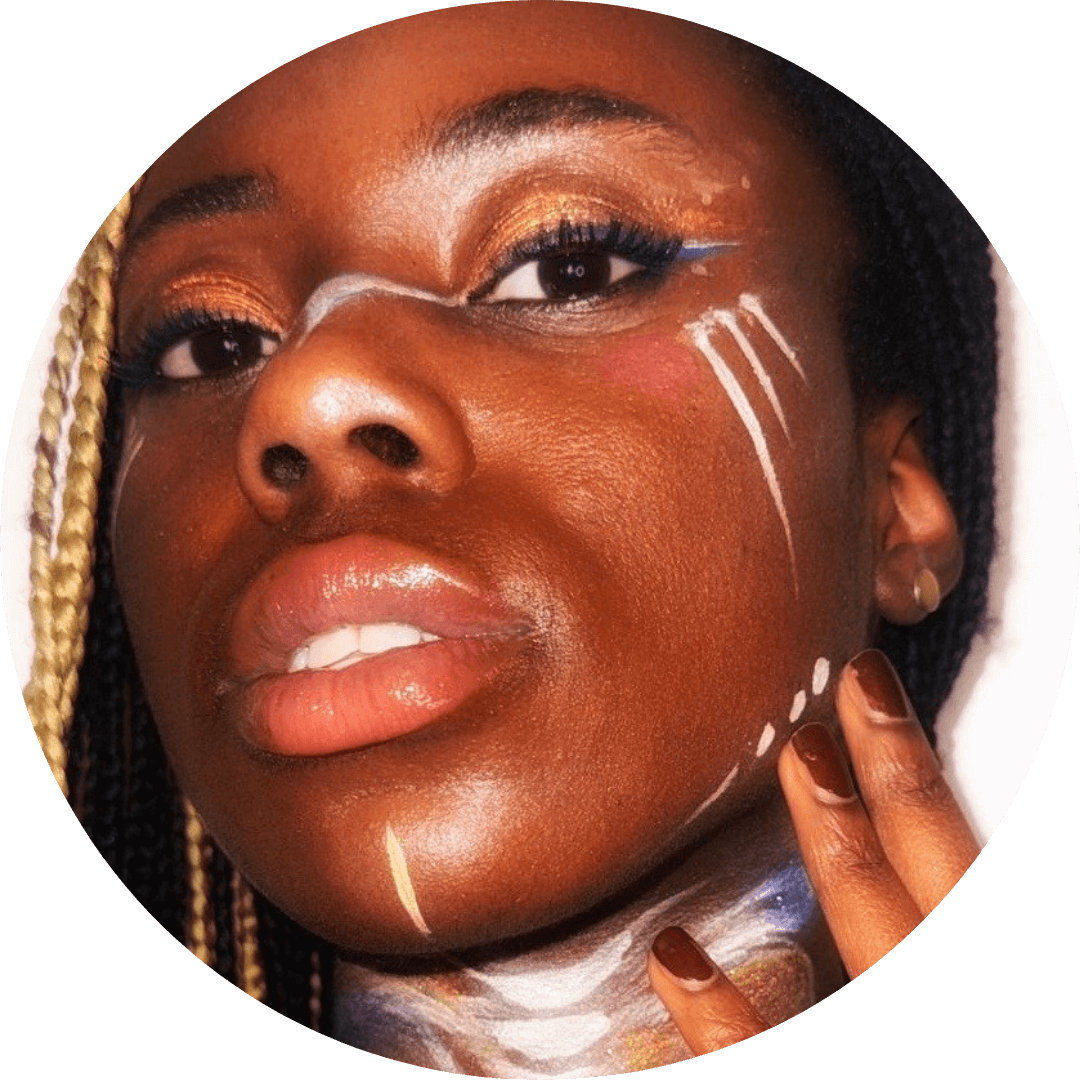
Tracy Abenaa Osei-Tutu (she/universe)
read more...
Tracy is a changemaker and multidisciplinary artist with Ghanaian roots.
In her work, she explores social leverage points that enable decolonial transformation—an approach she has further developed through her studies in political science.
Through dance, music, painting, and performance, she speaks the universal language of imagination.
Her art reminds us that creativity and expression belong to everyone, regardless of background, age, or gender.
She also explores the transformative potential of Indigenous cultures and practices of reconnecting with nature.
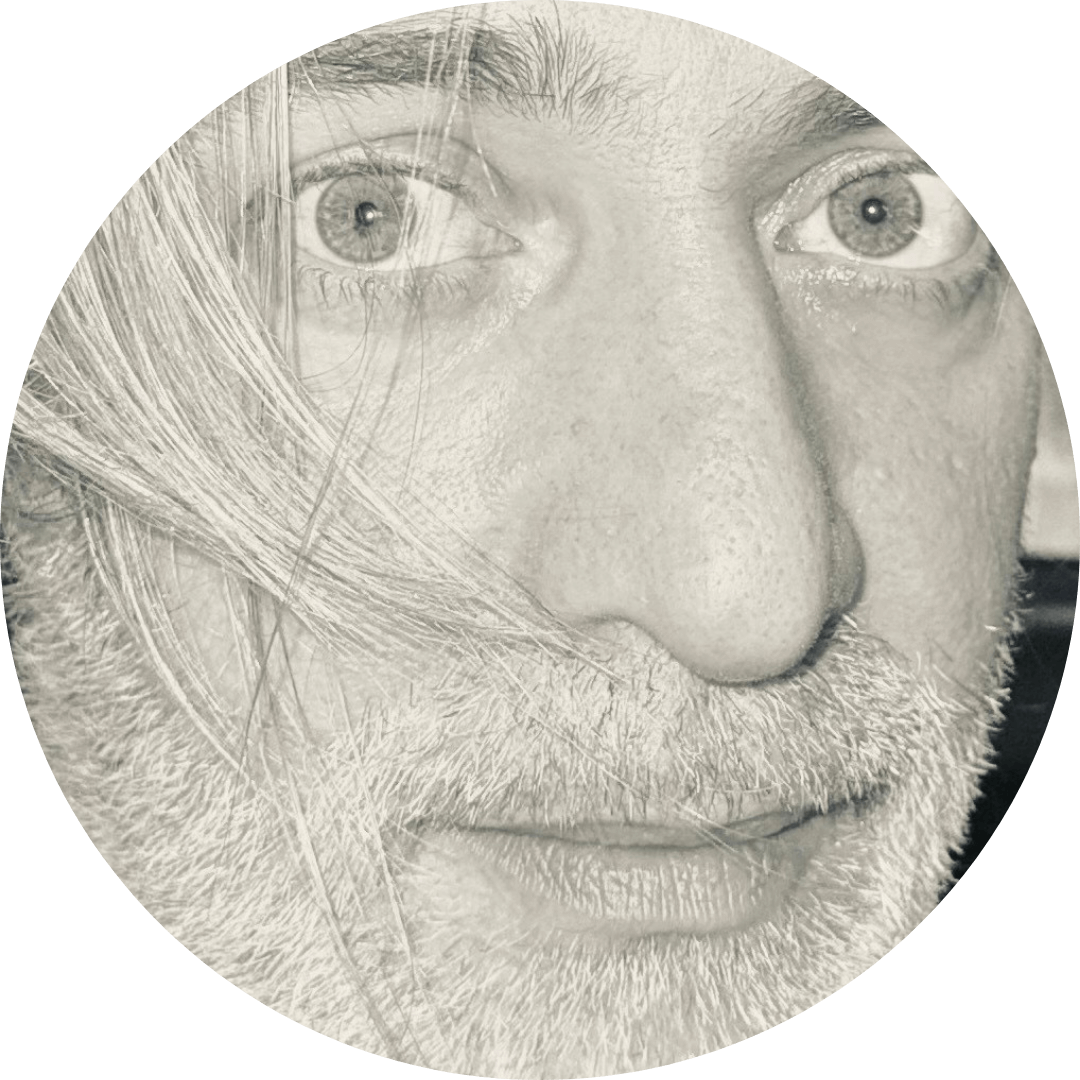
Ivo Hlavac (he)
read more...
Ivo is a multidisciplinary artist, art director, and political designer with a Slovak migration background.
His artistic practice moves between graphic design, performance, and social experimentation, with a focus on transformation, visual poetry, and consciousness.
Through the KinderKunstVerein, he creates creative spaces of experience for children and for adults seeking to reconnect with their inner child.
In his conceptual and design work, he reflects on themes such as displacement, system critique, and cultural self-empowerment.
His work has received numerous awards.
>> group is full <<
Track 3
Even more sensing?
“When We Perceive Again” is the title of my book published in 2021.
People often say to me: “I don’t know if I want that. Do we really have to become even more sensitive? I can’t handle that.”
read more...
I can understand that very well. No – let’s not turn heightened sensitivity into a new dogma.
Instead, I wish for us to move open questions together:
How do I stay permeable in an overwhelming world? When is it good to have healthy protection? And how do we do that?
In this track, we will explore sensing just as much as numbness. We learn about the intelligence of our organism, especially the nervous system. We breathe. We feel the ground, ourselves, one another. We explore our needs and boundaries. We try to find a language to communicate all of this. And we place our experiences within the broader context of a society that, as it currently functions, can only do so because we have learned to numb ourselves.
Language: German
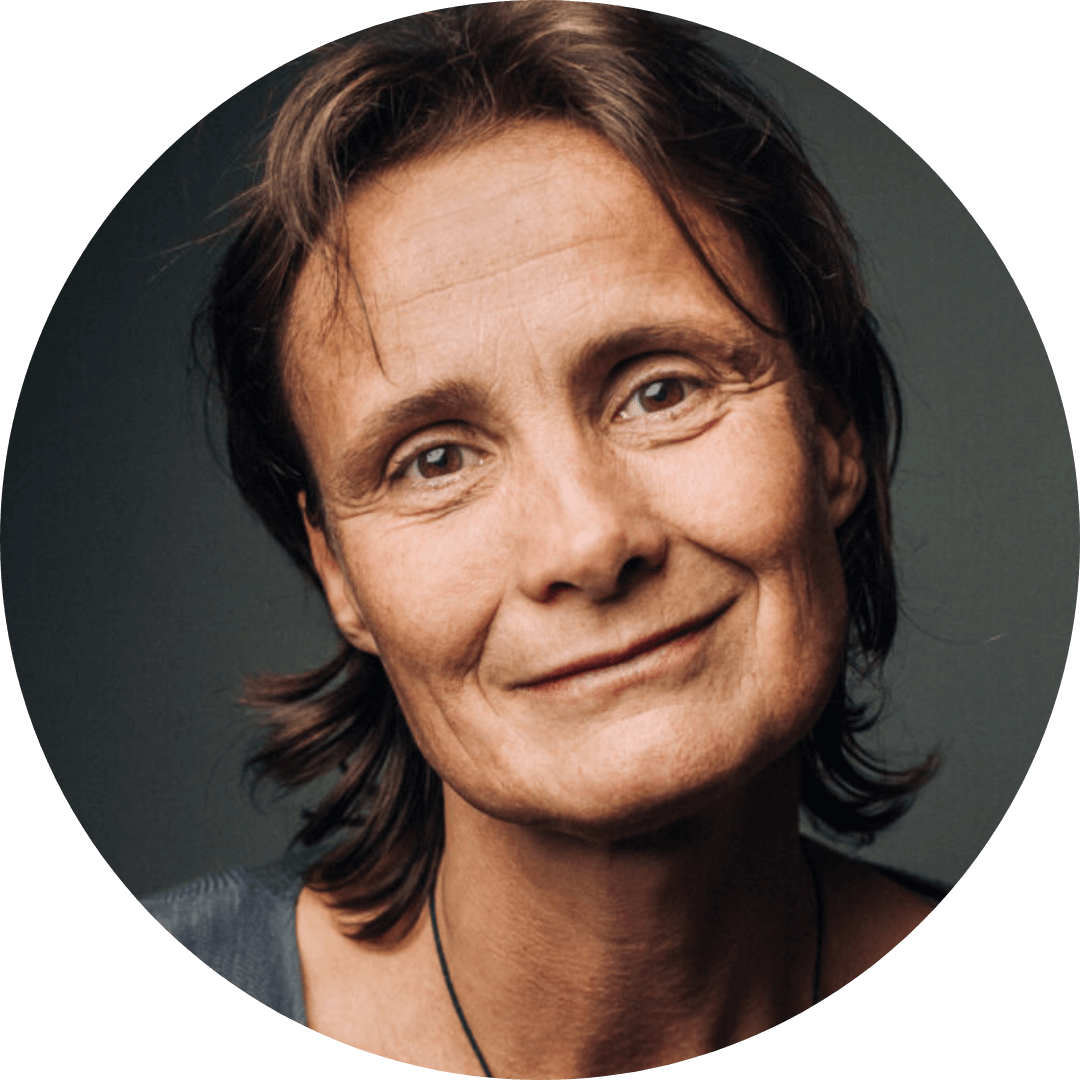
Heike Pourian (she)
read more...
I see myself as a researcher of transformation. The foundation of my work is Contact Improvisation. It is my dance home and an experimental field for transformative processes.
In 2016, my book A Touchable World. Contact Improvisation as a Culture That Moves Society was published. In 2021, it was followed by When We Perceive Again. Meeting the Crises of Our Time Awake and Sensing.
At the moment, my energy flows mainly into building the “Wegwarte”, a learning and research space for perceptive social design and caring forms of economy.
And I am the mother of two wonderful adult children.
www.beruehrbarewelt.de
www.wahrnehmen.org
www.wegwarte.haus
>> group is full <<
Track 4
Tending the cracks
Grief, Collapse, and the Art of Failure
read more...
Endings do not have a good reputation in our society.
We want nothing to do with death, failure, or not-knowing. But what if we were to offer loving attention to the inevitable dying of the world as we know it? What if we listened to the stories of cracks and scars—the beautiful and the ugly, the personal and the collective? What if we accompanied this dying with care and welcomed what is emerging without suffocating it with our expectations?
How can moments of failure become compost that nourishes new life? What might the landscape—and the often underestimated human capacity to grieve—teach us? And why can none of us do this alone?
These and other questions are what we will explore together in this track.
Language: German
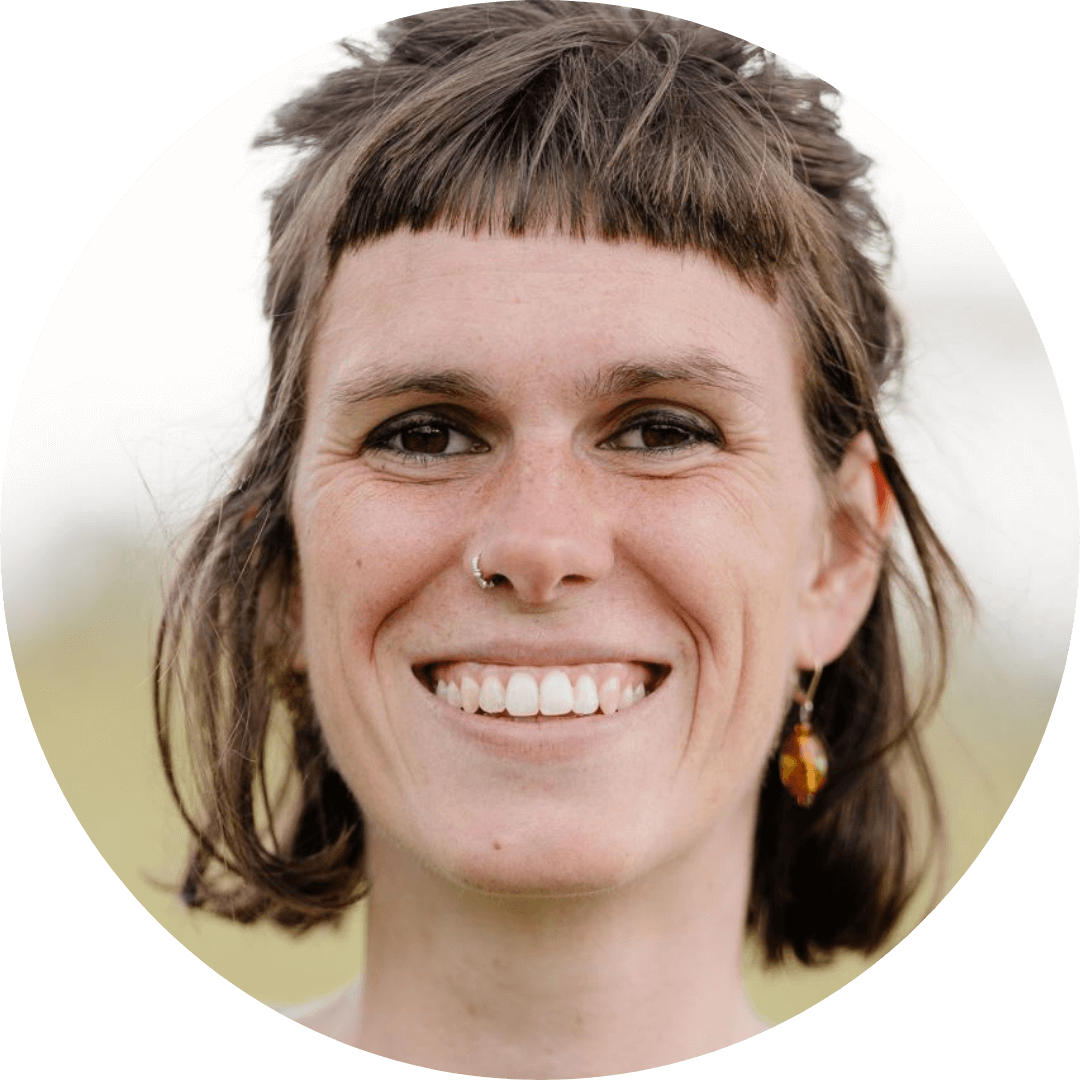
Mala Claer (she)
read more...
Over ten years ago, my Couchsurfing host in New Zealand, who was about my age, said to me:
„We are Generation Y. The Y stands for a fork in the road. Our society cannot continue as it has. It will undergo radical change within our lifetime. By Design or by Disaster.“
Since then, I have worked as a nature-guided process facilitator, leader of nature retreats, and cultural weaver toward the By Design path. For a long time, I believed we could still steer the course.
By now, it has become clear that this process of change will not happen without disaster.
My work now revolves around the questions:
How can we live resiliently and lovingly in times of social and ecological collapse?
How can we mitigate the consequences for one another?
How can we succeed in leaving a livable Earth behind?
What support do the children of our time need from us?
I am a mother of a young child, and we live together with my partner in the Hunsrück region.
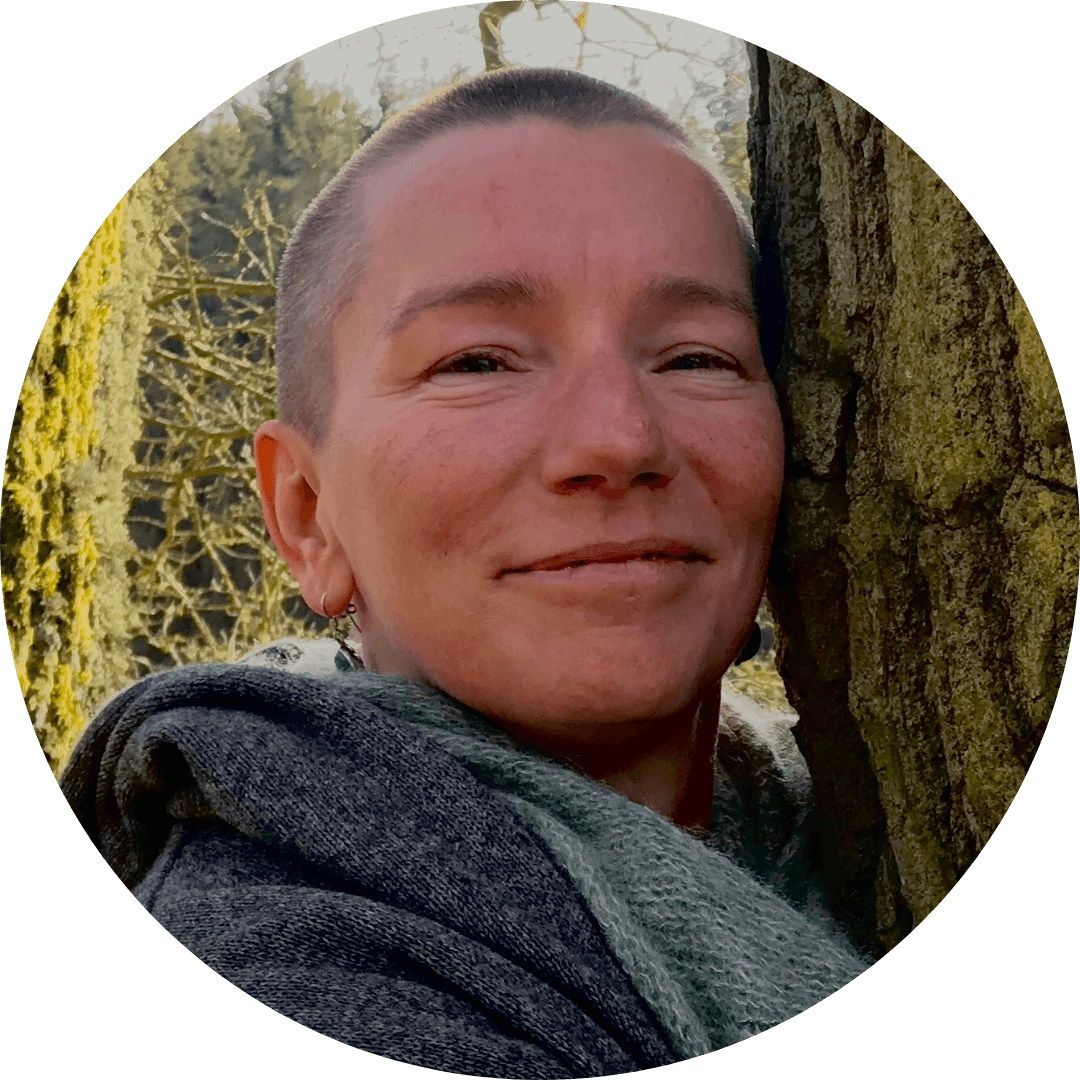
Maya Mahn (none)
read more...
I like to turn over stones, worldviews, and self-images to see what’s crawling underneath—what is nourishment, and what is more like compost.
>> group is full <<
Track 5
Hospicing Modernity
Which deeply ingrained patterns of modernity still shape our activism today, despite all our efforts?
read more...
What does impact feel like on a nervous-system level?
And what could truly modern end-of-life accompaniment look like?
This workshop track is not for the faint-hearted. Together, we embark on an adventure through rough waters. Our endeavor: to dive as deeply and relationally as possible into our own colonial patterns of thought, action, and feeling.
Or in other words: we immerse ourselves in the life processes that are currently leading our society toward its own death.
Our starting point will be a strong web of relationships that we weave ourselves.
From there, we will dive—using, among other things, methods from the Theater of the Oppressed—into our colonial/white patterns.
If all goes well, we will emerge with a vision of depolarizing activism.
Why do we do this?
Out of love for all living beings
Because our activism needs us
Because life is messy, and we are afraid of that
Because effectiveness does not come from urgency
And because, frankly, we don’t really know what else to do
Note: This track references the books Hospicing Modernity and Outgrowing Modernity, as well as the work of the Gesturing Towards Decolonial Futures collective. It is explicitly aimed at white people from the Global North who want to engage with their internalized colonialism—not to “free” them, but to make complexities and entanglements visible.
Language: German
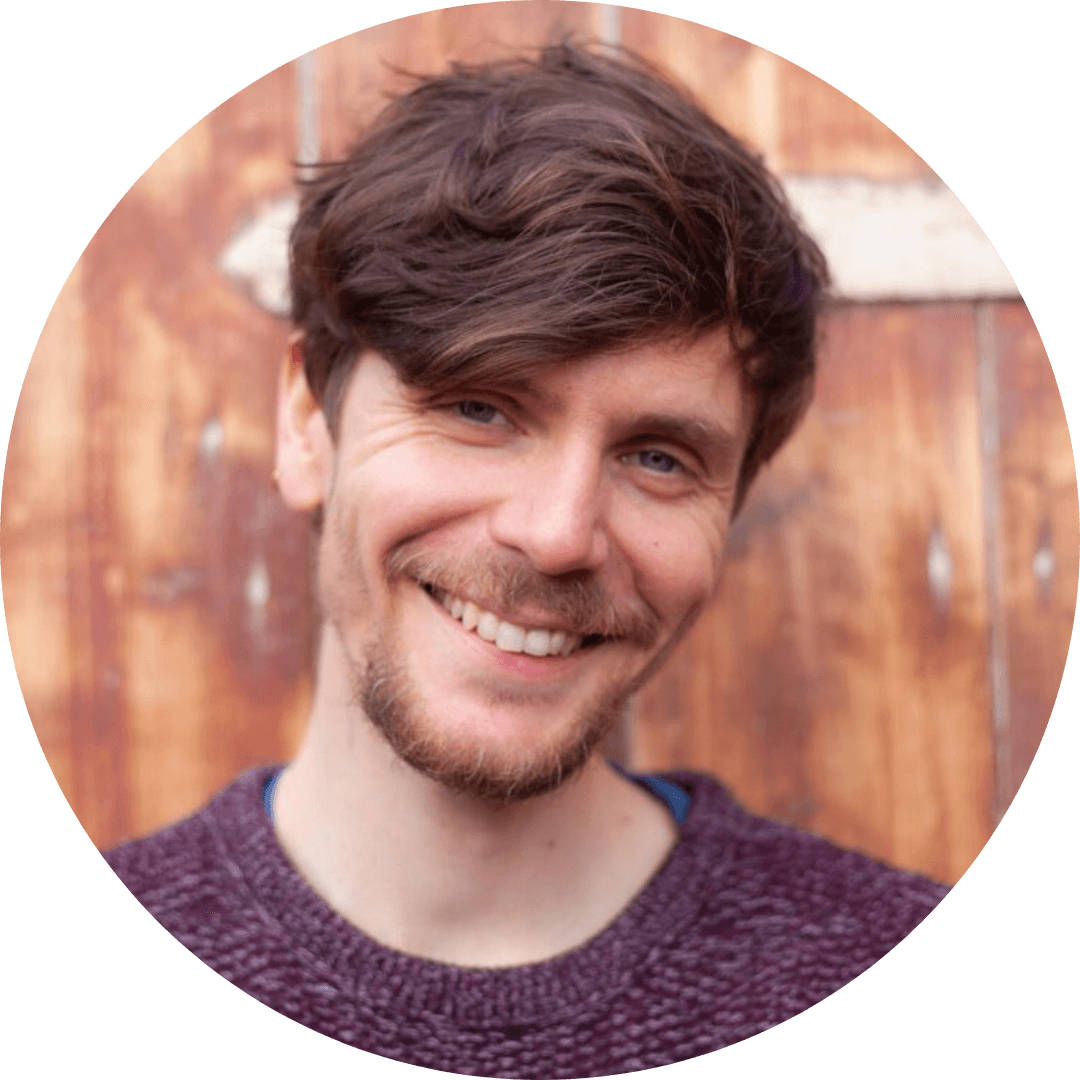
Robin Dirks (he)
read more...
Robin is a world-walker, an expectant father, a nervous-system activist, a regional pollinator, and a community being through and through.
His work is shaped by a deep engagement with the question of how we as humans can (re)embed ourselves into something larger. Through journeys across many countries and continents, countless seminars and trainings, and many forests and landscapes, Robin discovered transition accompaniment as his heart’s work.
Robin is rooted in the Werra–Meißner region, where he is increasingly weaving himself into regional myths and living networks. He earns his living as a process facilitator.
His home is Haus in der Blume, a salamander conservation area and a place for retreats and regeneration.
For Robin, engaging with his whiteness and internalized colonial patterns is an exciting learning journey and a return to intimate relationality with all that lives.
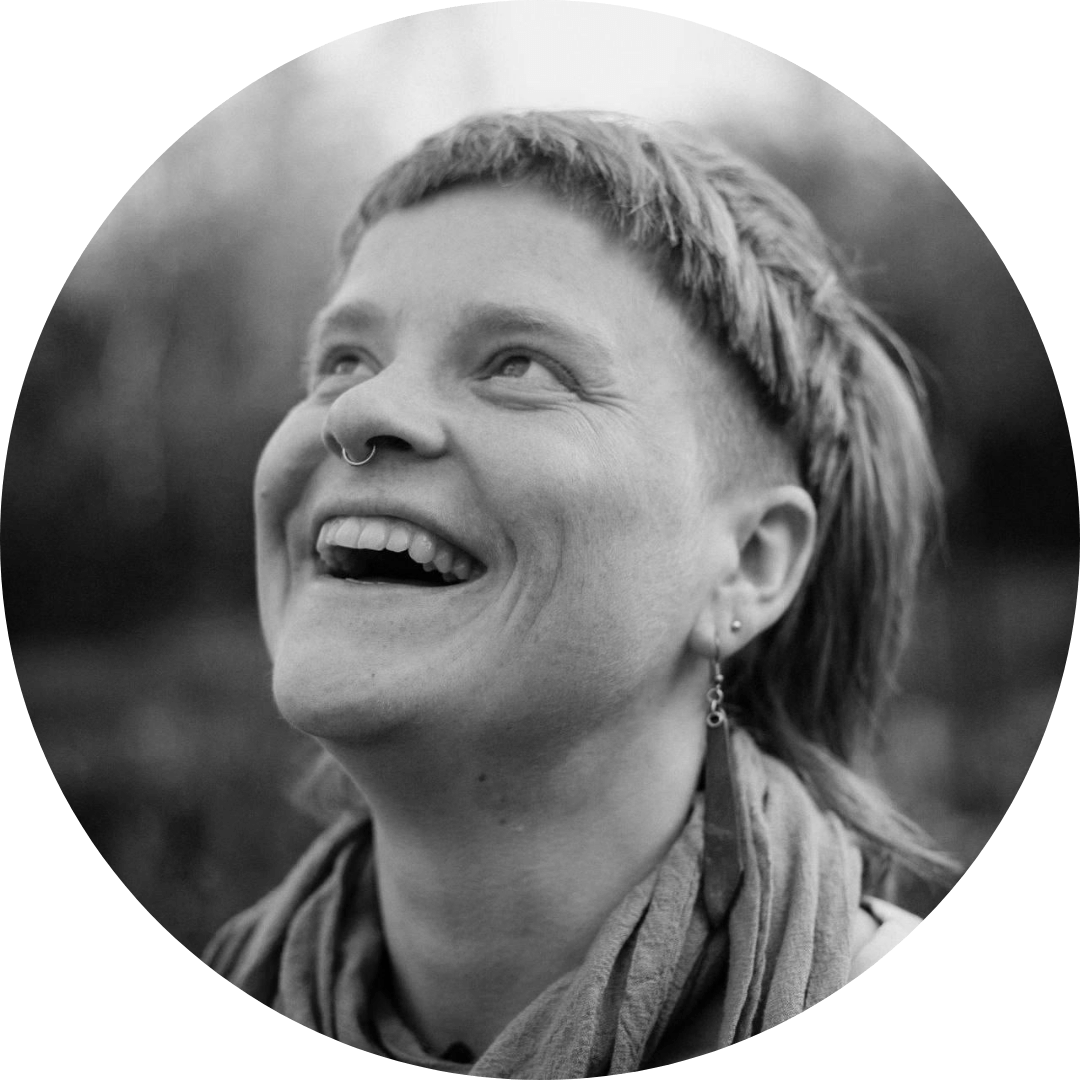
Lara Faust (none/she)
read more...
The Emerge Festival, formerly Living Future, is a playground for me. A place where I can explore and experiment—held within a web of relationships. People who are close to my heart, with whom I can look out into the world and inward into myself.
This is also what this track is about: Where do I find within myself and my body what I see in the outside world—such as discrimination, humiliation, and dehumanization? What changes when I imagine that I am not a separate part of the world, but the world itself? What does it mean to meet myself and others with dignity?
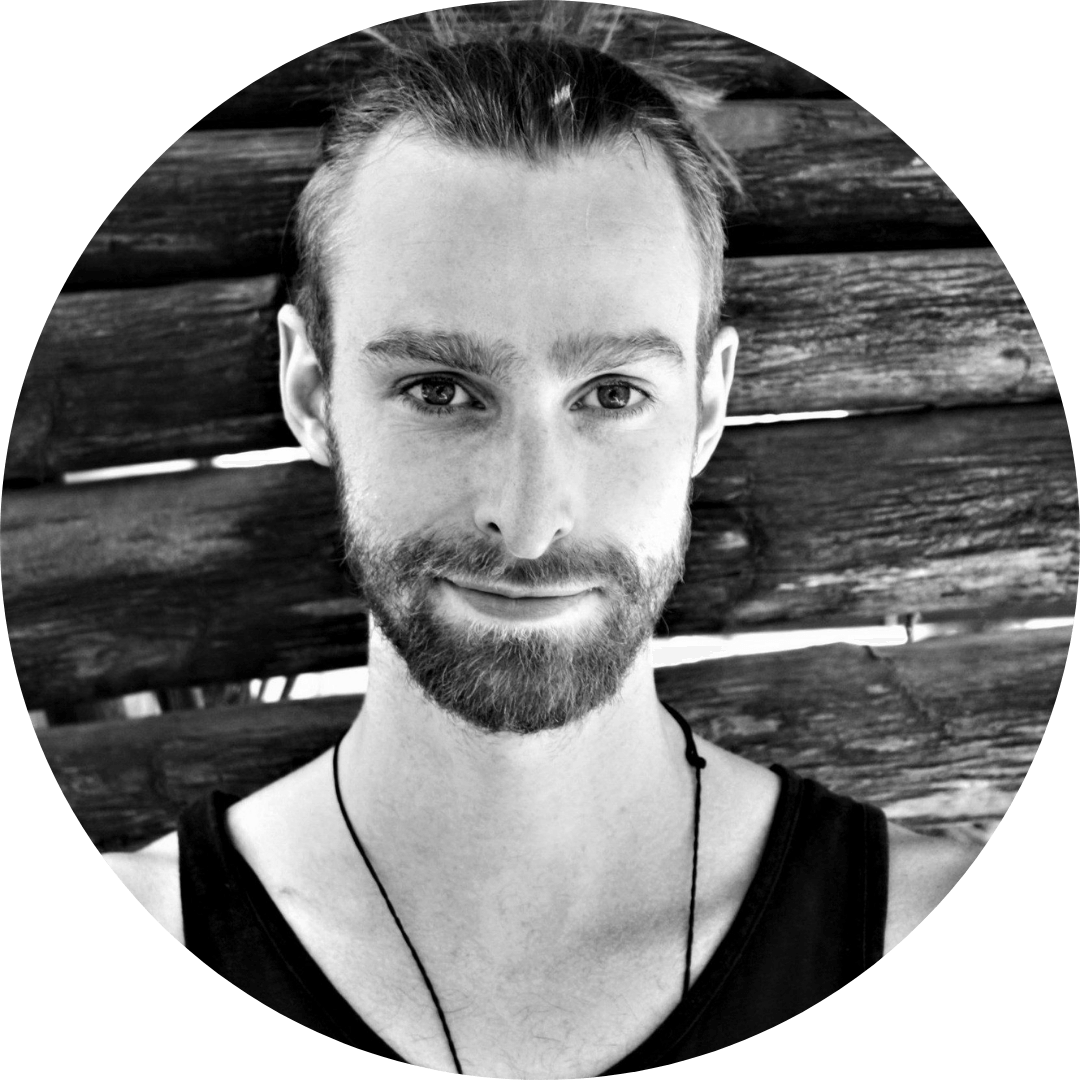
Leon (he)
read more...
My name is Leon, I am 32 years old, and beetroot leaves me rather indifferent. Its omnipresence feels like too much, and a healthier relationship would mean less. This is something I would also like to invite into my own life: less of everything, less luxury, more compost toilets; more connection with what surrounds us, and less escaping into global structures. This is not about withdrawing from our entanglement—and therefore complicity—in multiple forms of injustice and violence toward the human and more-than-human world. Rather, it is about raising questions:
How can we build locally resilient structures that provide a region with what is truly needed—if that is even possible? What is “needed”, and who gets to decide that?
What does this entanglement and complicity consist of, and how can we hold it emotionally without looking away? How can the nature that surrounds us not become history—and how can stories help create a life-centered connection rather than an anthropocentric one?
In short: I am interested in coloniality and the striving toward decolonial structures, and thus toward post-capitalist and non-patriarchal ways of living. I am interested in myths and stories, and in the power of oral culture in contrast to natural-scientific dominance. I am interested in the dissolving of dualisms and fixed spectrums, in connection with nature, in the courage to speak what moves us, and in humility toward what is, what was, and what will always be.
>> group is full <<
Track 6
WE - Re-emergence of the collective instinct
read more...
In the midst of complex paradigm changes and falling empires, bunches of overly individualized people are craving to return to a collective form that has been long forgotten and seems to be inaccessible. We try to find meaning in facts and ideologies, or in the repetition of ancient forms, but nothing seems to work completely, as we continue the insane race towards an undesired fragmented destiny.
But, what if the highest form of intelligence and expression we can experience together is not rational? What if there’s an immaterial field that comes to life when we become part of a bigger circle? What if this common field of undiscovered potentiality is the doorway to our next steps in evolution?
WE is an invitation to reconsider what you (think you) know about humans in a collective state. And to experience the possibility of letting our natural instinct guide us back to where we always belonged: The flock, the pack, the nest, the hive, the tribe
From morphic resonance to contact improvisation, from anarchy to somatics. A body oriented process with creativity as the igniting fire. Biology, politics, psychology and arts weaving together in this collective countercultural exploration, becoming a possible antidote for a world in dissociation.
Language: English
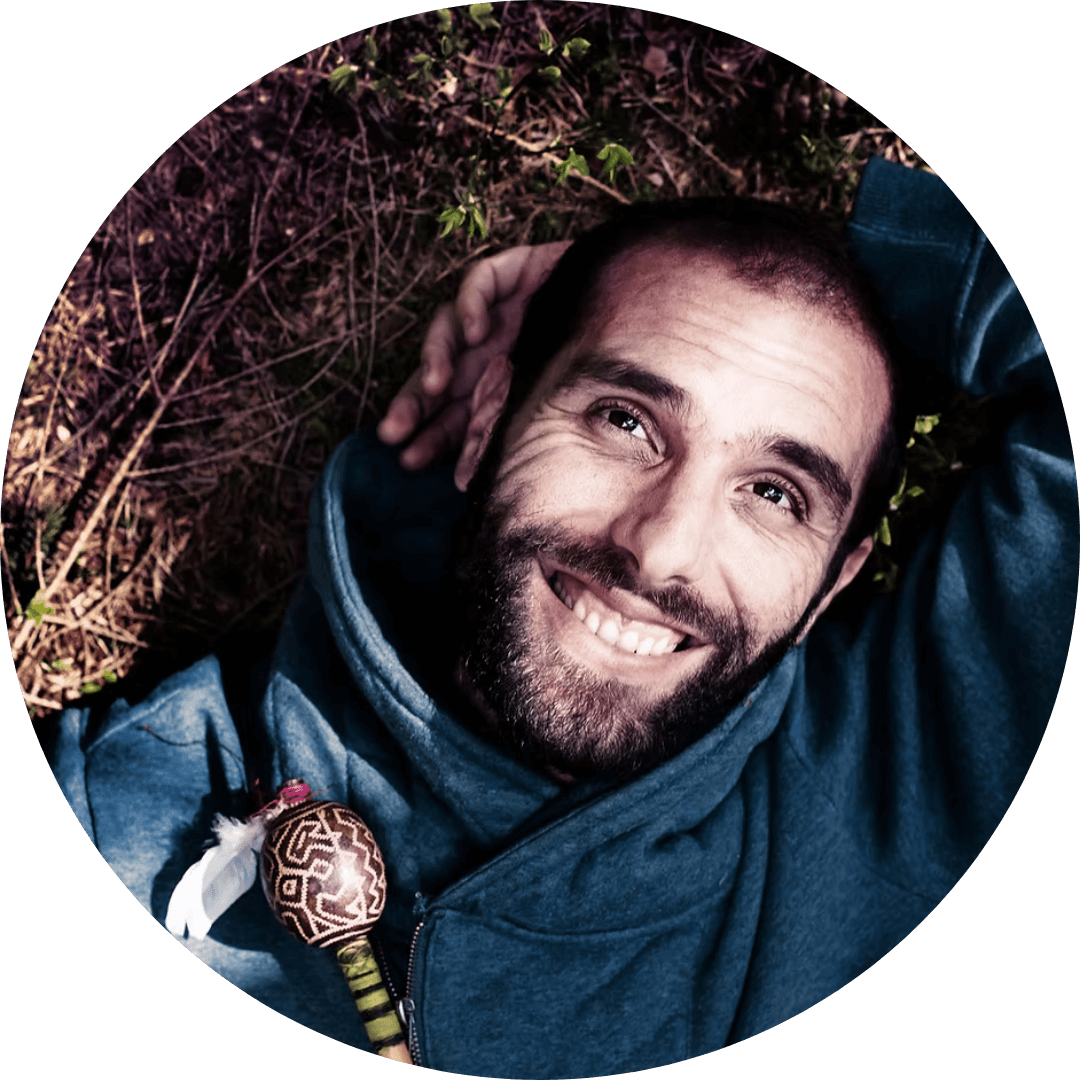
Nicolás Cambas (he)
read more...
I consider myself a curious experimentalist — sometimes an artist, sometimes a teacher, sometimes a therapist, always a student of life. I’m inspired by creativity, intuition, ancient traditions, nature, and the power of the collective. I believe our deepest potential is to be original creators.
I grew up in Argentina, where social and political unrest led me to leave academia and become a nomadic clown. I traveled across South America performing in the streets and connecting with ancestral and shamanic cultures in the Andes and the Amazon. Along the way, I trained in theatre, improvisation, and diverse therapeutic and shamanic modalities, engaging in social and therapeutic work in war and displacement contexts (Colombia, Ecuador, Venezuela, Palestine). Through embodiment, I developed a personal pedagogical approach that integrates these experiences, later sharing my research in Europe within the transpersonal psychology field.
These paths led me to found CaminoCreativo (www.caminocreativo.net). For 18 years now, I’ve facilitated creative and therapeutic processes for people of all ages and backgrounds worldwide.
I’m currently studying Gestalt psychotherapy and Somatic Experiencing.
The further Program
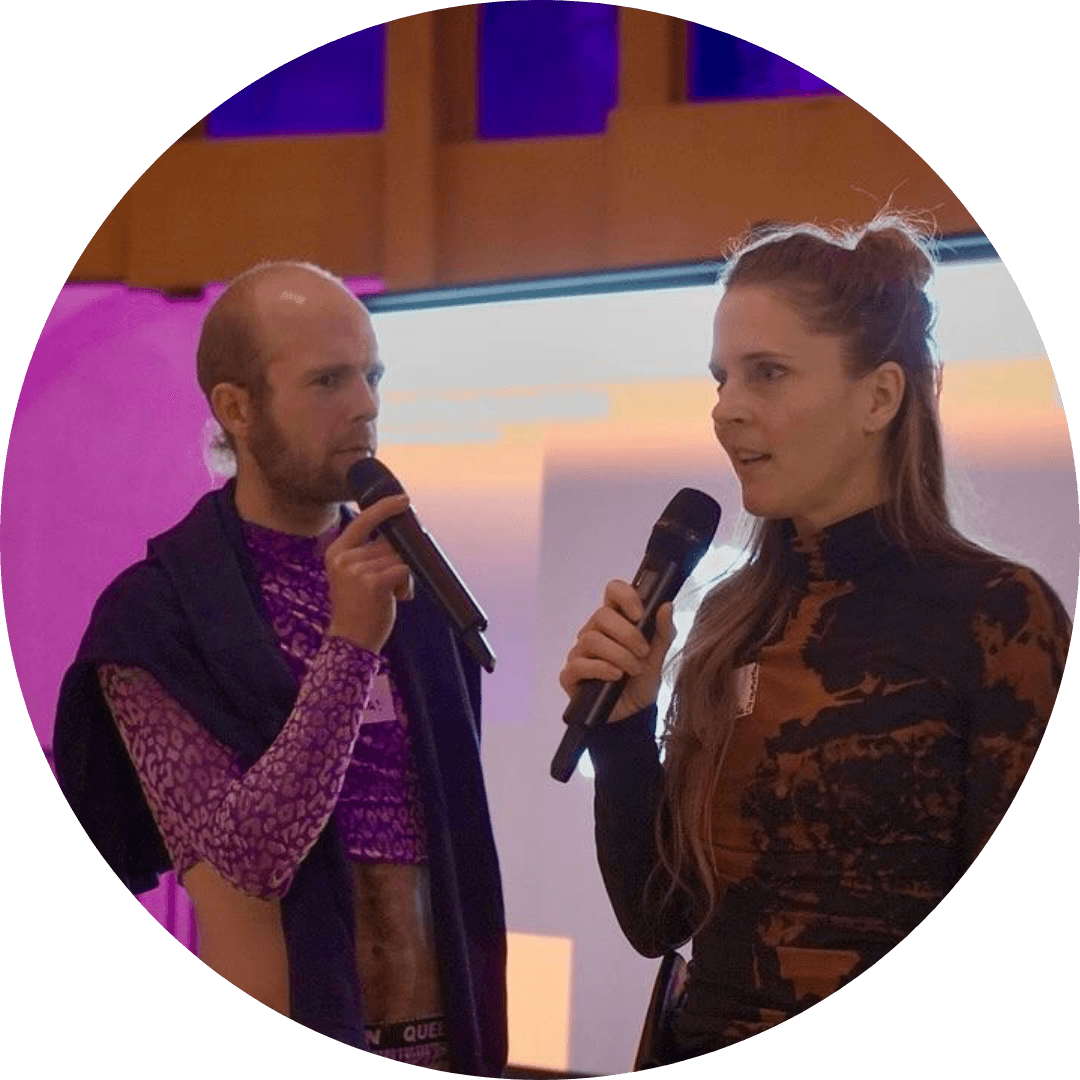
Theresa Leisgang (she)
Gerriet Schwen (mixed pronouns)
Rave Ritual: Facing Collapse
read more...
What if we radically acknowledged where we are right now? And for once, didn’t suppress what this stirs within us?
Let’s face it: this can be overwhelming.
But we are many. We came to this camp because we know how the world stands.
Because we are deeply committed to working for the best possible futures.
In this 90-minute rave ritual, we create a space together where no words are needed between us.
We dance through the unspeakable, we shake ourselves free, we breathe, we sweat.
To the beat of the music, we let emotions flow like waves through our bodies, moving what too often gets stuck in everyday life.
The meadow becomes our dancefloor, our dance moves become ritual.
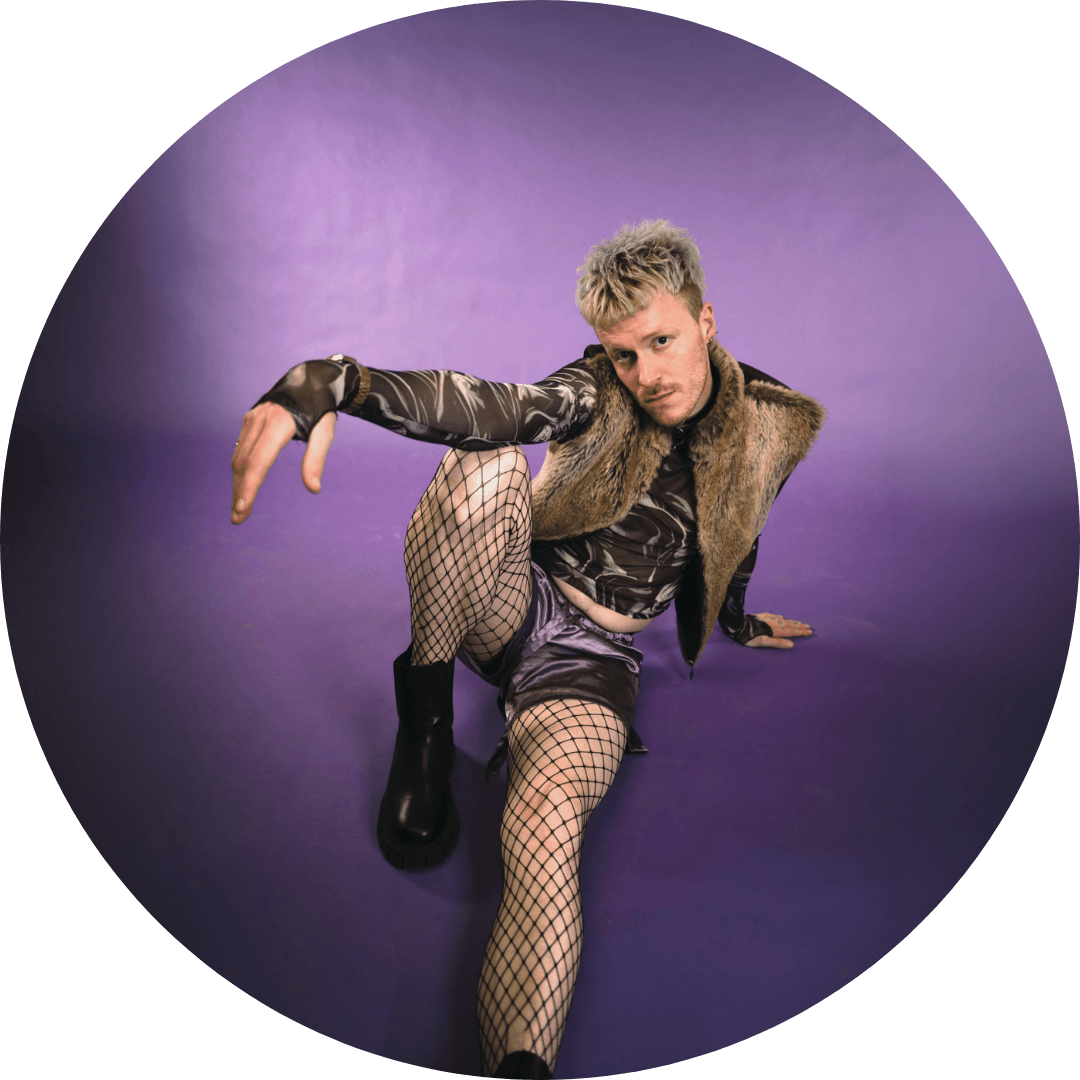
SAKURI (dey)
Make Rhythm Resistant Again
read more...
SAKURI is a multi-genre artist and board member of the dance and cultural collective Ecstatic Cuties e.V. (organizers of festivals like Juicy Lab in Berlin), advocating for queer and more equitable art and culture in the German-speaking world.
With the project group “Leaving Handprints”, dey developed a tool to increase the social sustainability of (music) festivals.
Musically strongly influenced by hip-hop and electronic dance music, SAKURI explores the resistant potential of the dance floor.
Queer empowerment, danceable resistance, and playful self-expression are the keywords of dey’s live performances, featuring original songs, trombone, and sharp, activating vocals—inspired by the connection of DJing and the original MCing at early block parties and later house parties in Black and queer communities in the USA in the 1970s and 1980s.
Born to slay and speak critique. All that in nice dresses. Artsy, weird, electronic, lyrical, nasty, queer, 161.
Music and more from SAKURI: https://linktr.ee/sakuri.dance
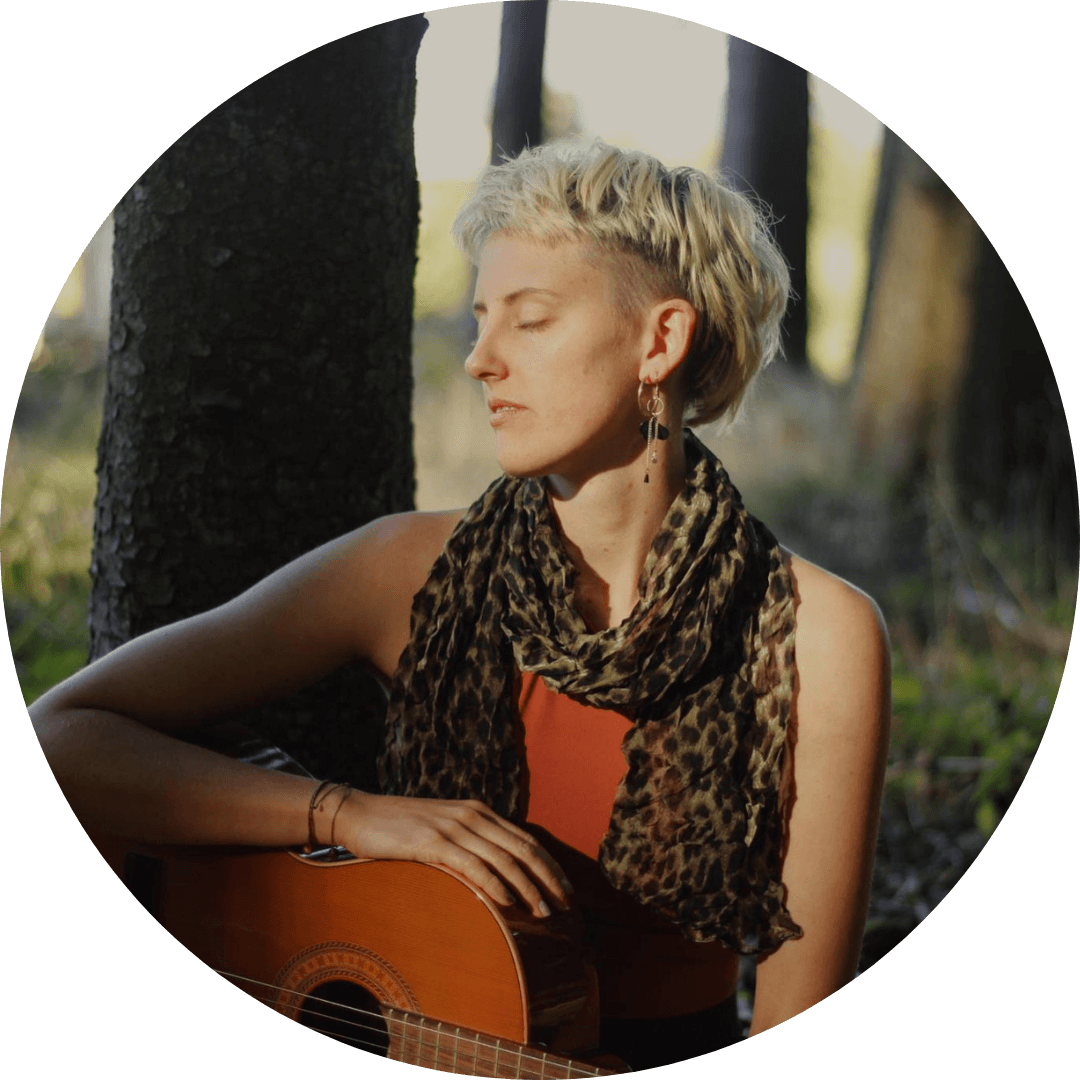
Louka Ananda (none/mixed pronomen)
Concert
read more...
The songs that emerge through me come from touch and presence.
They resist the pace of the world—slow, vulnerable, and persistent.
They invite us to pause and perceive again.
My voice seeks a ground for relationship.
Where are you when I show myself this way?
In this, a space sometimes opens for what hesitates, for what is just coming to life yet already carries a song within it.
A quiet form of resistance, grown from my listening, reaching toward the heart of things.
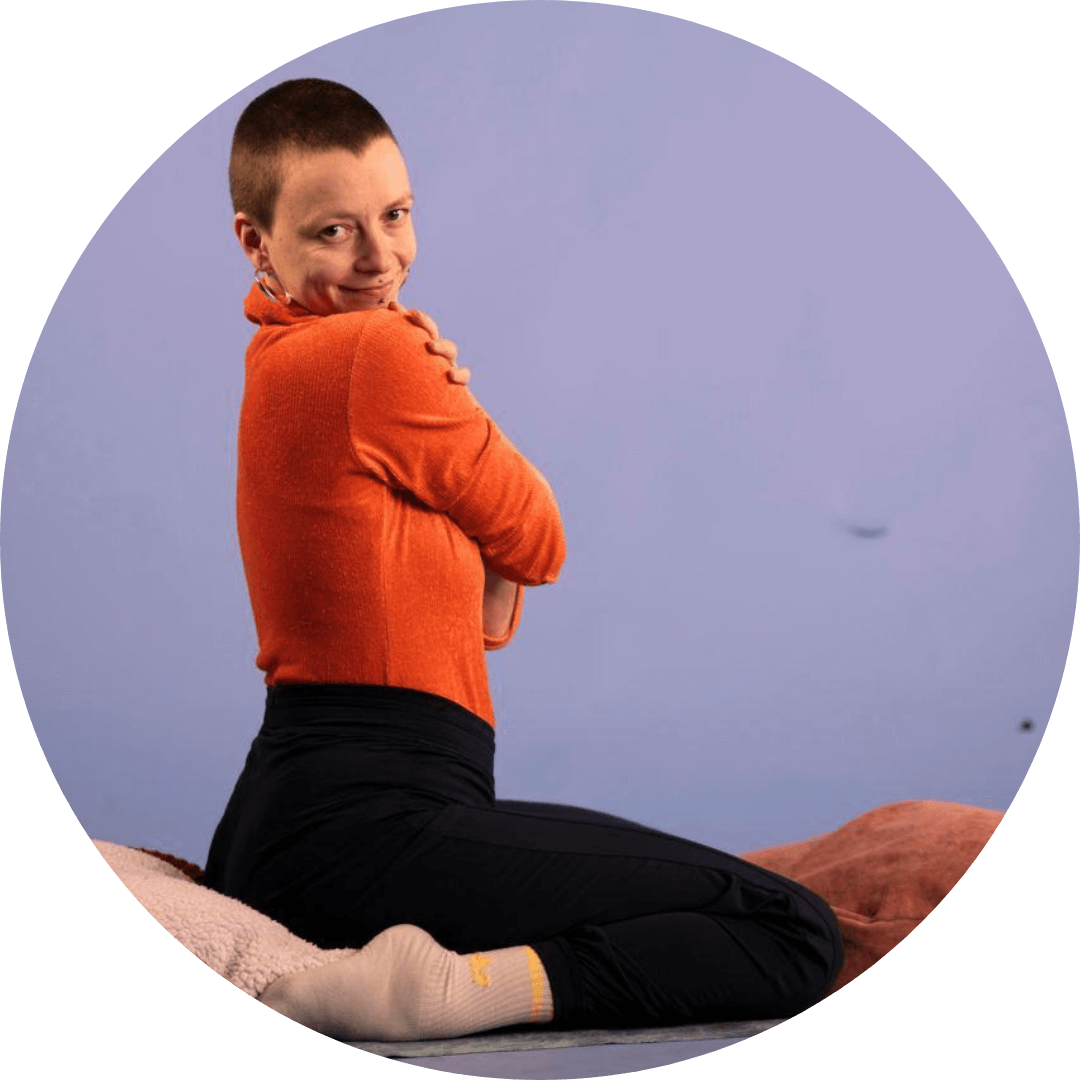
Zuzu (dey/they)
Resting & Nesting
read more...
How would your life feel if it were safe enough to not be able to do more?
If it were really okay to need a break—again and again? What does rest have to do with resistance practices, and what role does rest play in capitalism?
The fact that rest is often considered a privilege or luxury—one that is primarily granted to white, high-earning bodies—says a lot about the society we live in.
Pressure to perform, exhaustion, constant functioning, the feeling of never being enough—many of us are familiar with this. And these conditions are not simply your fault. These inner movements are an expression of the individual’s response to structural and collective values and demands. Difficulties with rest and relaxation are not a personal failure. They are an expression of a nervous system trying to survive in the Western world.
In this workshop, Zuzu invites you to explore relaxation as a practice, to find a deeper understanding of yourself and an active way of dealing with stress, tension, and restlessness. Using methods from body therapy, somatic approaches, and music, Zuzu opens up a collective space to let what is there be there. What each of us brings with us. And to be exhausted together.
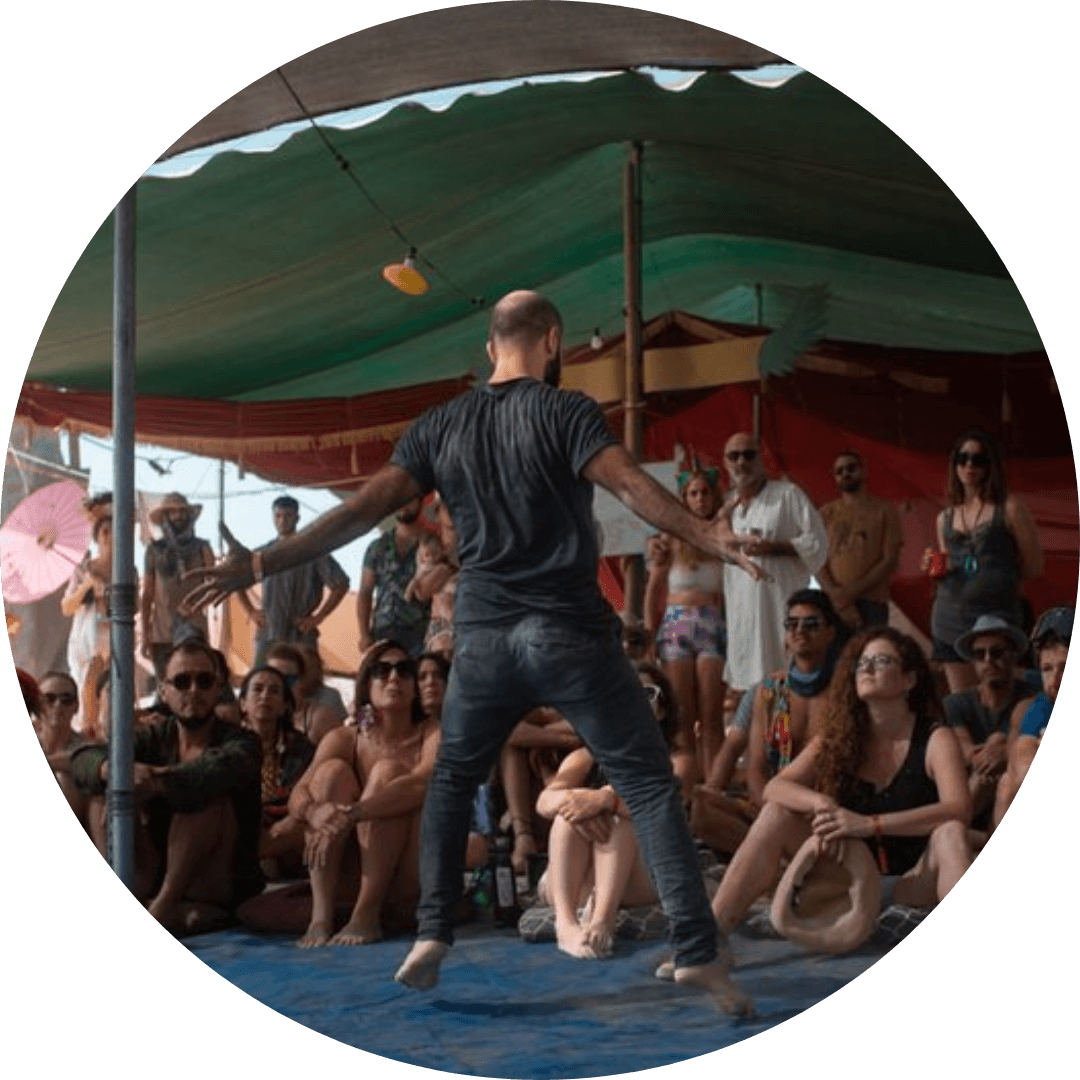
Saed Mansour (he)
"اثنين שתיים"
Dance Performance
read more...
I am a Palestinian that grew up in Israel and with that comes a great amount of political and identity complexity. Originally in 2021 this solo was created and performed in Israeli spaces with the consciousness that I am Palestinian and the audience is Israeli. Then it developed further as I performed it in Palestinian/Israeli spaces, Palestinian only, and global spaces.
A Palestinian performer that takes himself and the audience on an emotional/spiritual process – embodying the political story of the land that transcends the local into a human story of violence, fear, and whatever emotionally lies under systems of control. A performance about the duality of identity and duality in general.
From this solo originated the workshop Dancing the Political.
In this version for Emerge festival we will make a special experiment that I have yet to ever make that will draw on the fact that we are there doing Dancing the Political process. Come and watch!
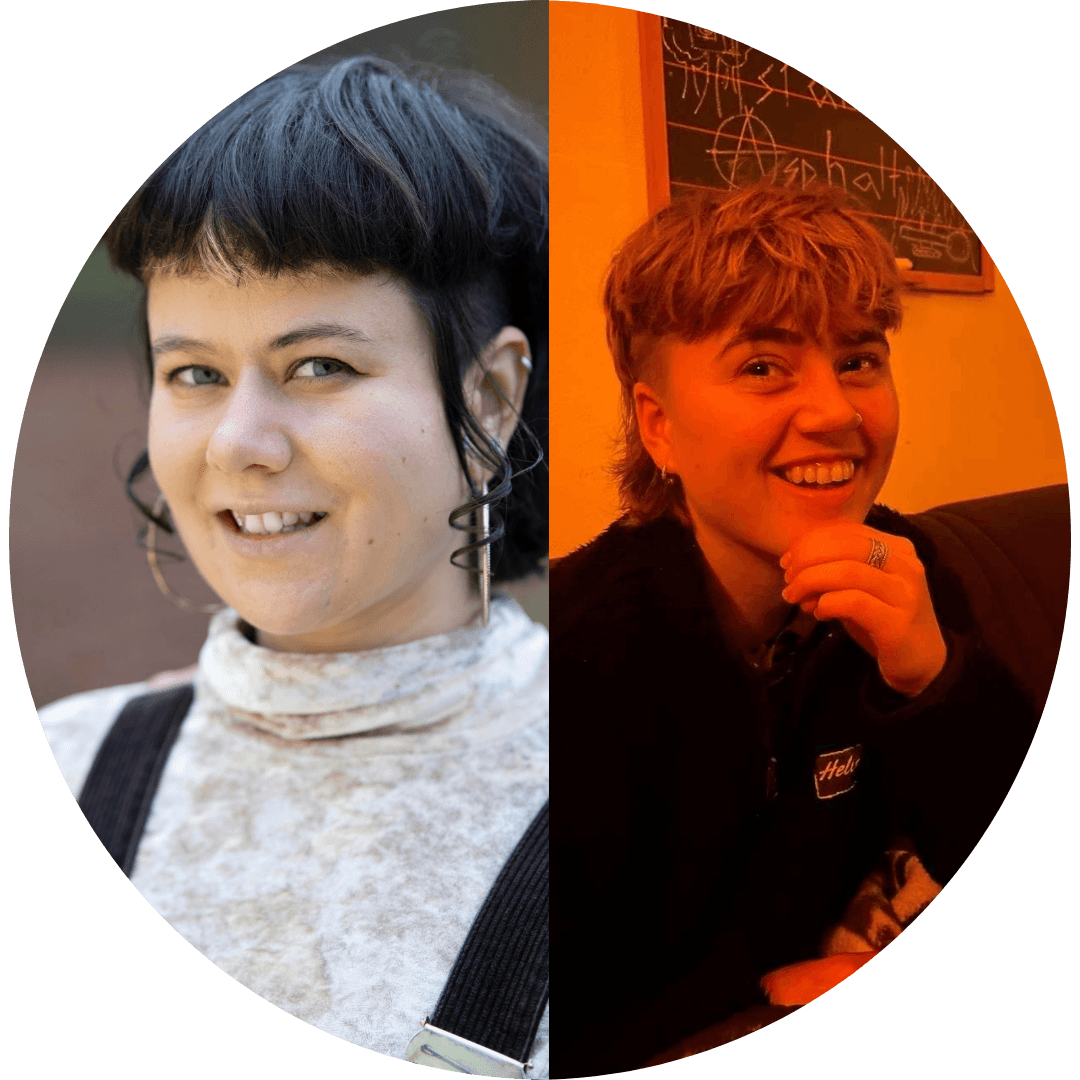
Birk (they/them)
Maya (none)
Poetry in a cracking system – a political poetry night by candlelight
read more...
In a patriarchal world shaped by climate collapse, multiple crises, genocide, and war, we see poetry as a tool against isolation, a form of artistic resistance, a coping strategy in a toxic world, and a means of connection for the mobilization of masses.
We are Maya and Birk, and both of us live and breathe artistic activism in different ways, having written about our feelings within and alongside this world for a long time. Together with you, we first want to write and, in a short writing workshop, give expression to our emotions and afterwards share and read both your texts and ours.
The space is open to everyone who has ever written something or wants to write. No prior experience and no “finished” or “highly poetic” texts are needed. Because everything is poetry and poetry is political!
We invite you to share any texts that move your heart and look forward to hearing your poems, notes, unfinished thoughts, and scraps of writing. You are also welcome to share texts you did not write yourself but that still deeply touch you.
8:00 PM – Writing Workshop
8:45 PM – Poetry Night
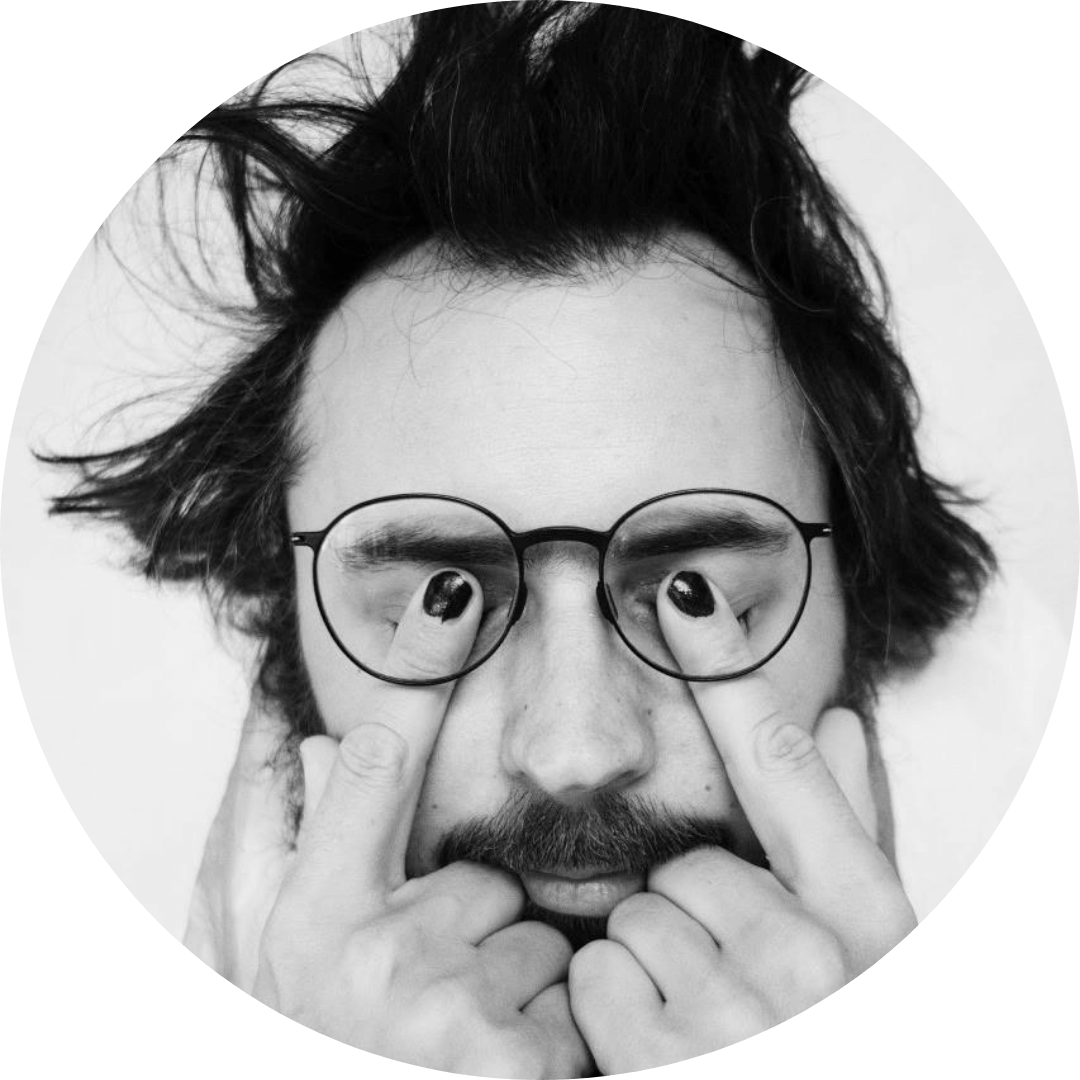
Sebastian Utecht (he)
Playfall – Morning Sessions
read more...
I would like to share my current areas of research with you and start the day with awareness and movement. The movement research starts off gently, softly, small and individually. I guide movements with words and pose questions during the explorations.
As the hour progresses, we will increasingly come into contact with the environment and others, playfully seeking the flow of the day.
The Morning Sessions are based on my experiences and training in physical theatre, clowning, playfighting, somatic experiencing and Feldenkrais, and reflect my areas of interest, in which I continually explore different types of play and lightness with people and, on the other hand, am interested in how a touch of this can be maintained even in difficult situations.
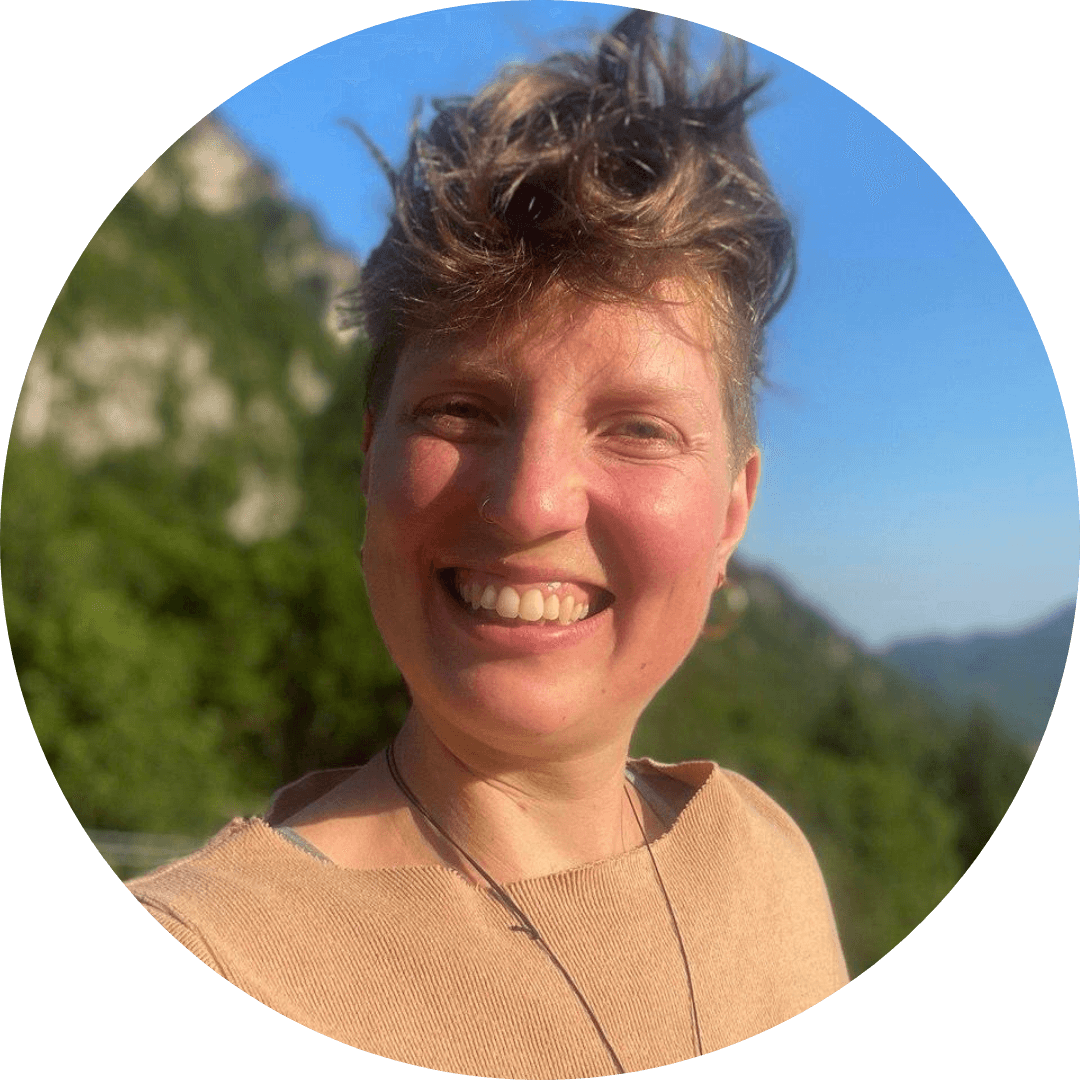
Helena (hän/none)
Somatic Listening to Stories on Resilience and Resistance
read more...
We come together in a circle and listen to stories about resistance and love of life. You will be guided to adopt relaxed postures that allow you to sink deeper—into the presence of your body, into the qualities of the stories, and into questions about aliveness, struggle, and devotion.
Participation is possible at all levels of mobility and energy.
Bring comfortable clothing and a blanket.
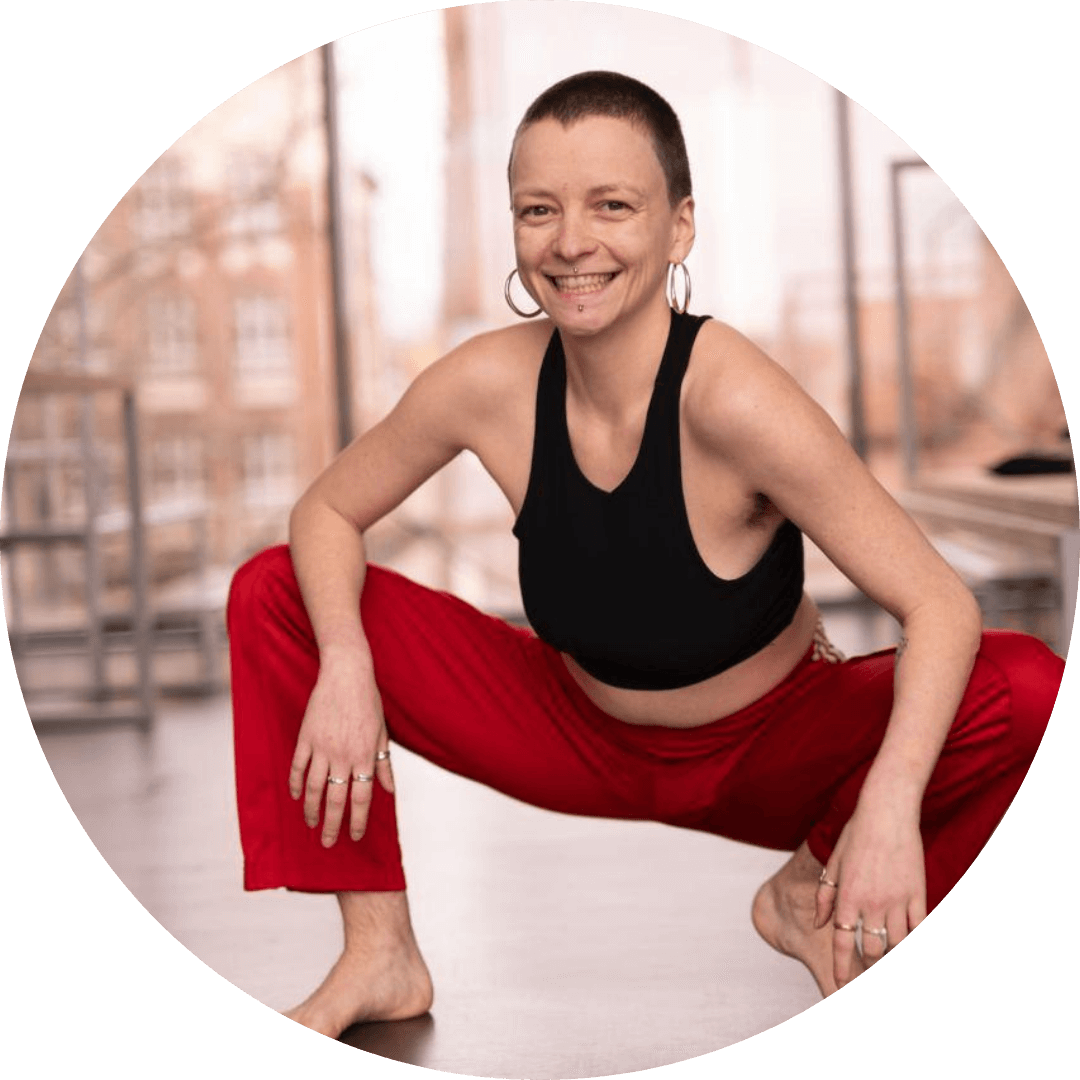
Zuzu (dey/they)
Somatic-emotional Practice
read more...
Movement & presence to start the day – different qualities. Shaking, softness, flow, and strength. Grounding in the morning as a basis for your day. Wake up your fascia, feel your muscles, and get the tissue under your skin flowing. Let the inner emotional and outer landscapes affect you in the morning and possibly find alignment for the day.
No previous knowledge necessary. Easy, adaptable exercises. Zuzu brings methods from somatic yoga, somatics, and dance.
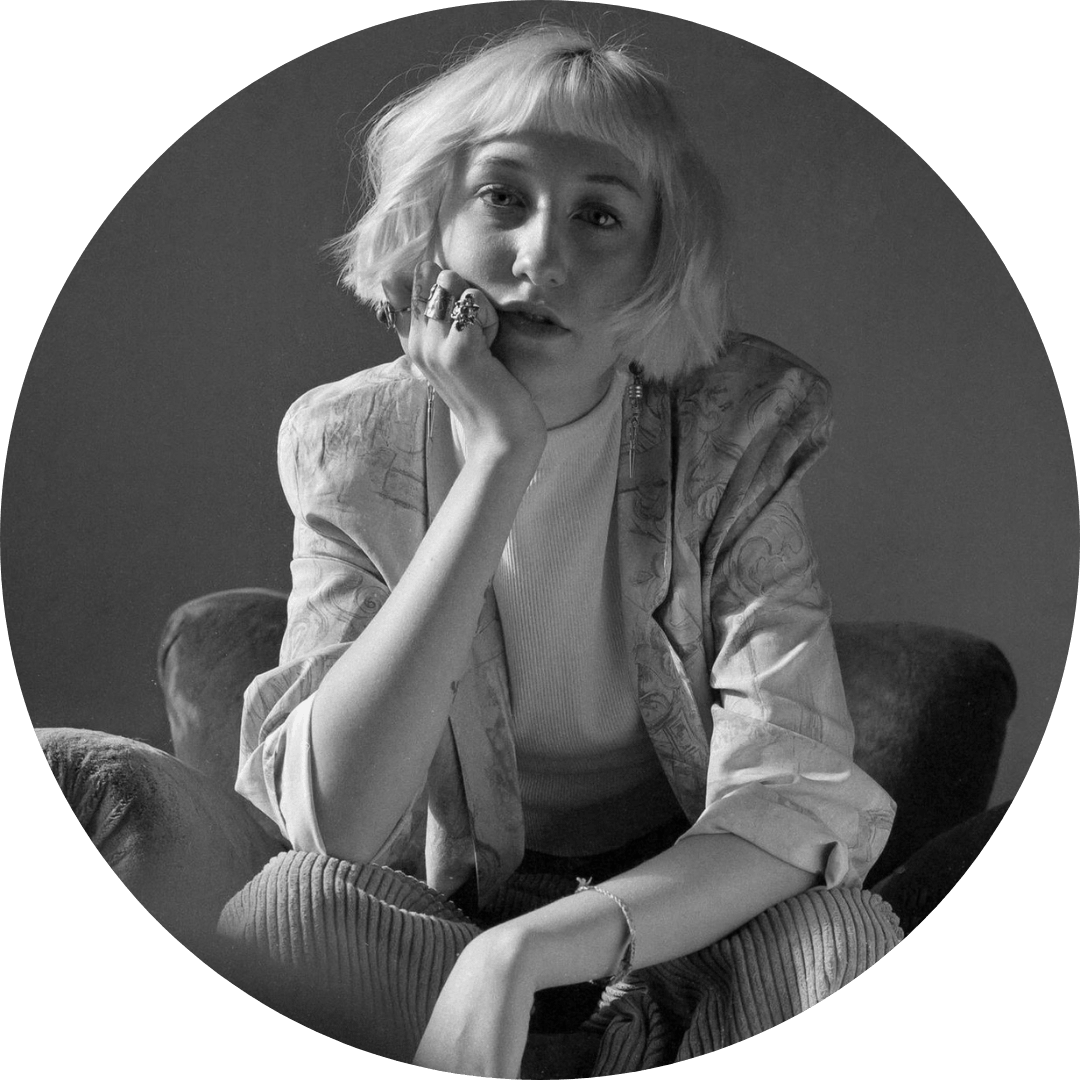
Hanna Juno (she)
Letters to Alice - A Reading
read more...
“We must protect ourselves from the over-foreignization of German society.”
These are the words of Alice Weidel, lead candidate of the AfD.
What would it be like to meet Alice Weidel and say everything – everything that matters?
What would it be like to open a window into a twilight space where real encounter becomes possible?
Hanna writes letters to Alice.
In the world of these letters, she takes Alice – silent, subtly resistant – on a journey:
into an engagement with otherness, into circling and trying to understand right-wing positioning, into touching the wound and the anger of not being heard.
In these encounters, the two meet – on playgrounds, in trenches, over ice cream, and at gas stations.
“Letters to Alice” stands for the enduring power of tenderness and the relevance of the poetic in encounters with politics.
A shared space for feeling into a dialogue that is not yet possible and becomes more possible the more we are able to imagine it.
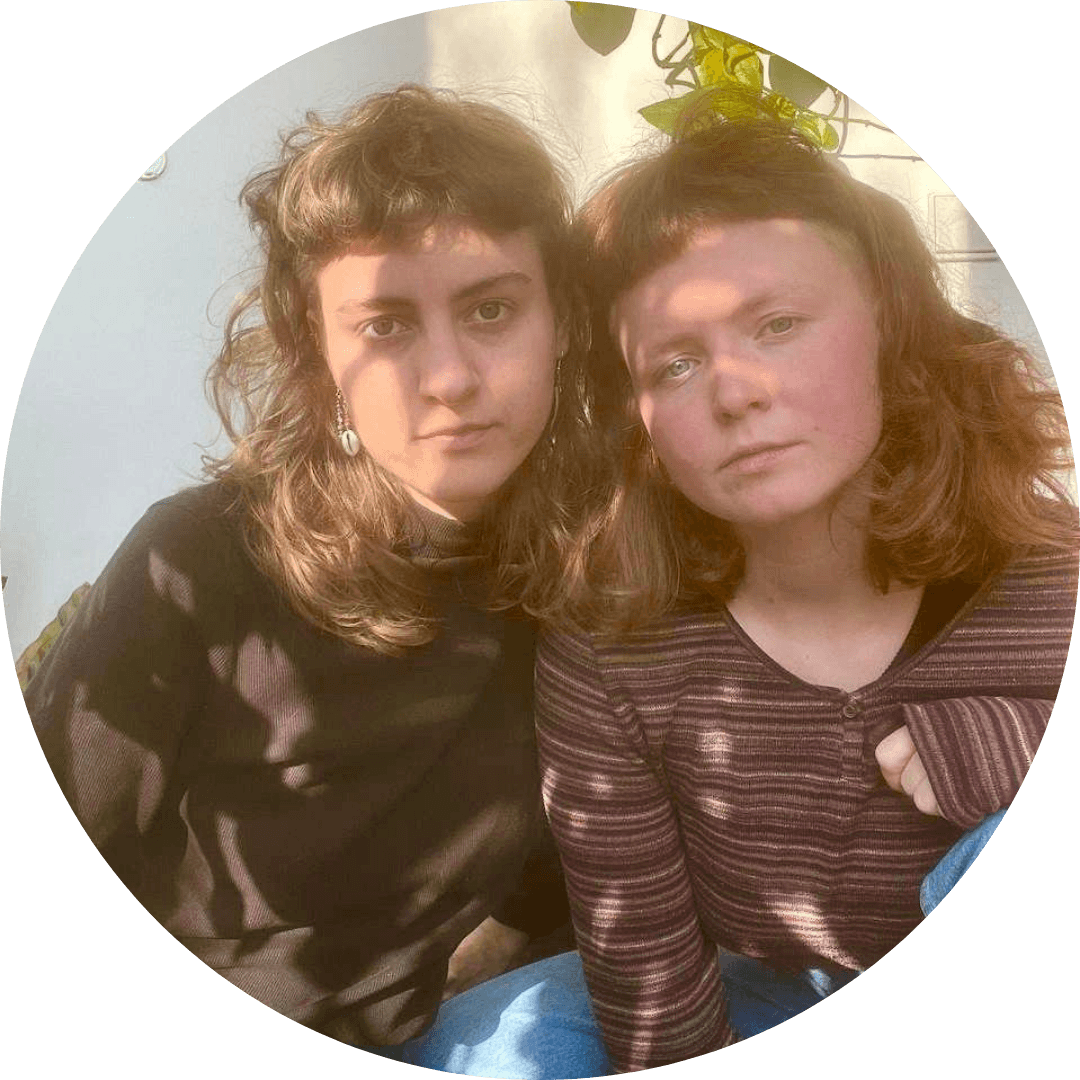
emmaundfrances (she)
indie folk pop
Concert
read more...
Our music tells stories of the big and the small moments of life.
It is meant for everyone—touching people in their diverse life situations and creating moments of closeness. We want to celebrate our joy in music and creative expression.
What once only happened during late-night sessions sitting on the edge of a bed now takes place on stages—and more recently, in the recording studio.
Together, we arrange our musical ideas, weave our voices through playful guitar patterns, and accompany ourselves with viola, cello, flute, and (body) percussion.
And the most beautiful part: we feel so at home with each other that every stage still feels like sitting together on the edge of a bed.
Katja-Bahini (she)
Movement Playground & Shaking Practice
read more...
In the Movement Playground, playful and dynamic impulses alternate to support and develop mobility, motor skills, body awareness, and physical fitness. Sometimes we explore short guided movement sequences, while at other times we work with more fundamental movement principles derived from the natural anatomy of the human body. The session is rounded off with a phase of free movement and dance improvisation.
Joy, curiosity, and the pleasure of moving—and discovering the wide range of possibilities within our bodies—are at the heart of the practice.
Elements we play with include:
– Animal moves and playful interaction
– Core training and strengthening
– Motor skills
– Movement organization
– Dance improvisation
We shake because life is too precious to remain in numbness and avoidance.
We shake because we are hungry for more aliveness and willing to feel what might be holding us back. And we do it together, because it is so much easier that way.
During the practice, I offer inspirations and impulses to guide the flow of attention. At the beginning and the end, there is space to share our motivation and our experiences within the group.
Mala (she)
Vulnerability as a Resource
read more...
How can our very being – our tenderness, alivness and authenticity – enrich and gift the world?
How can vulnerability be a resource rather than disappearing into pain and patterns of trauma?
Vulnerability requires slowness, awareness, courage, honesty, connection and togetherness or community. In doing so we practise a new culture together.
This evening, we want to create a safe space together, where we are invited to be fully present, to acknowledge our vulnerability, to explore our pure being, and to reflect on the day together.
Robin (he)
Silvana (she)
Summer Solstice Ritual
read more...
How can we root our activism more deeply in natural cycles again?
One way is to pay attention to what is happening in the natural world around us and to celebrate the turning points of the seasons.
On June 21st, while we are gathered together at EMERGE, the summer solstice arrives: the moment when the sun reaches its highest point and the light celebrates its peak… before the darkness slowly begins to grow again for half a year.
Together with you, we want to pause, give thanks, let go, and celebrate.
Together, we connect with the qualities of this season and open a ritual space in which transformation can happen.
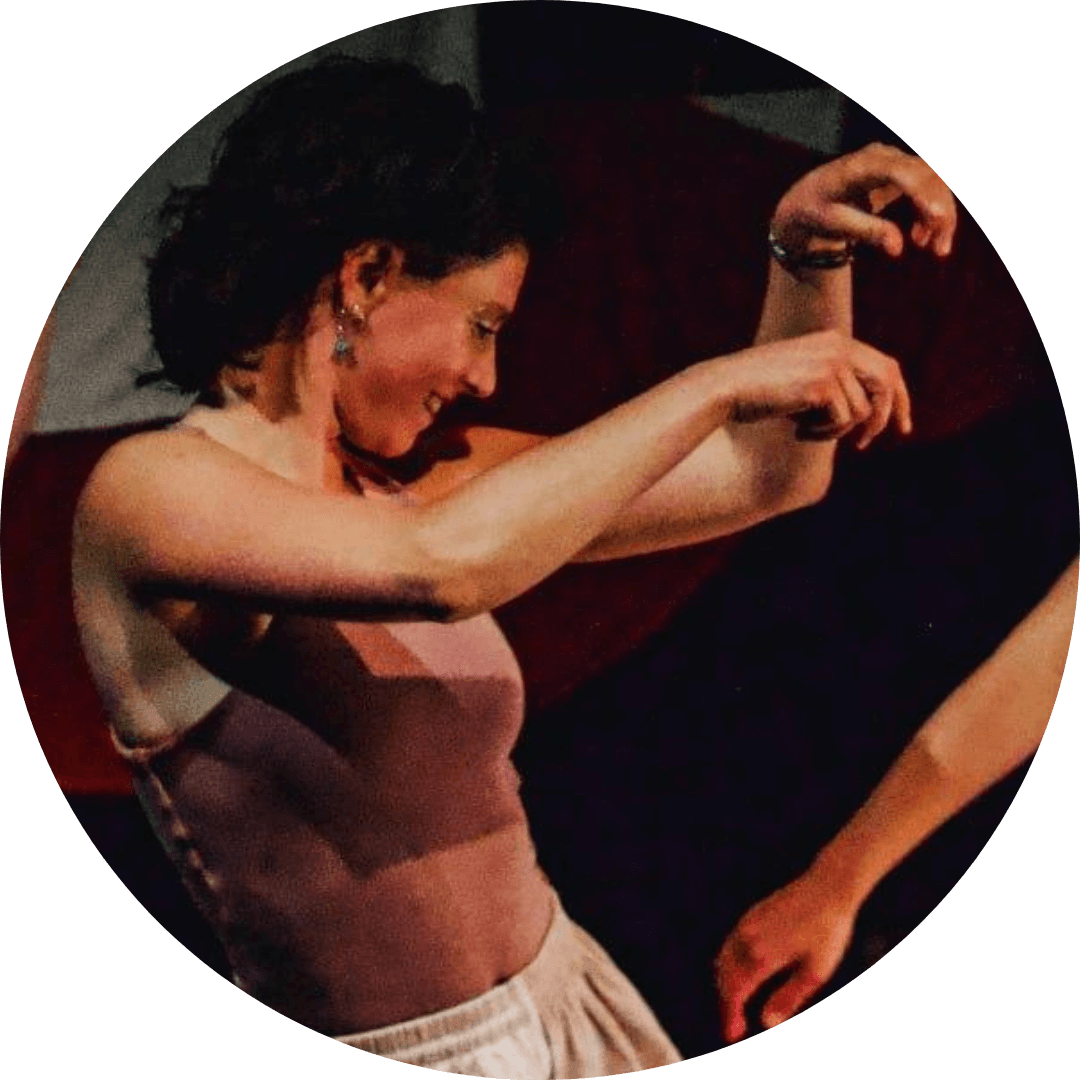
Antonia (none)
A Somatic Dance Morning
read more...
A guided body and dance journey to welcome the new day, ground yourself in your body, connect with yourself, and, if you like, with other bodies in the space. A somatic approach to connect with our physical and emotional bodies, combined with dance elements from improvisation, contemporary, and contact improvisation. Come as you are, with your intuition, curiosity, and sense of play!
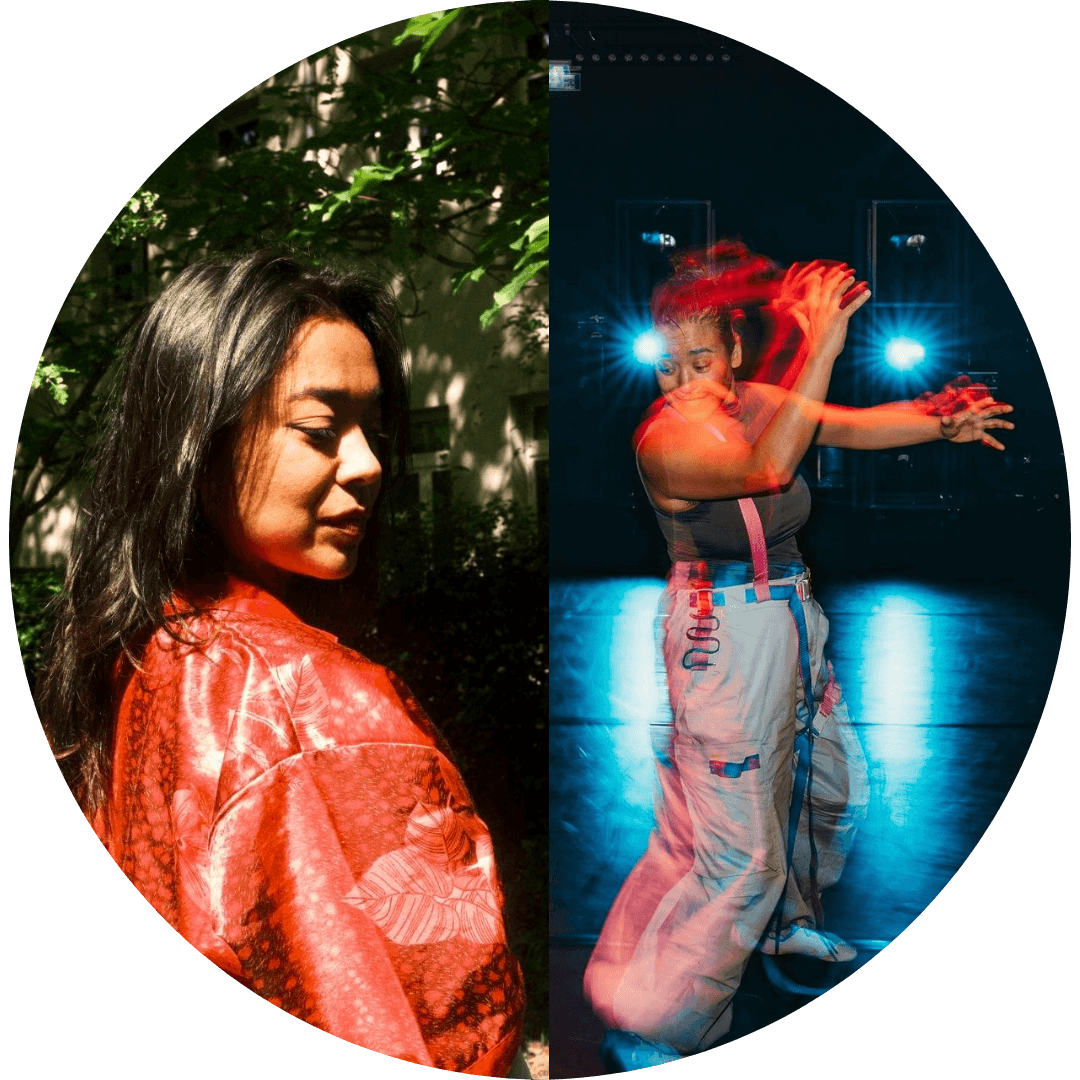
Senja (no pronouns)
Moving Joy beyond
read more...
‚Moving Joy‘, a Dance Journey, with Senja creates a space in which your own movements and the different facets of your body can be explored, felt and celebrated. Sometimes fast, sometimes slow, sometimes rhythmic, sometimes decelerated, sometimes with inner images or physical-anatomical foci, but always orientated towards: fun & pleasure!
It will be flowing.
It will be bodylicious.
It will be fancy.
The classes are fed with techniques from contemporary dance, improvisation and inspired by Butoh & performance art.
‘Moving Joy’ by Senja originally wanted to offer a more protected framework exclusively for people affected by racism. The aim was to build a political care structure and to give Bi_PoC, migrants and people affected by racism time and space to process, breathe out and feel themselves again through dance, movement and fun. In this today’s Dance Journey, everyone is lovingly invited to take part, while respecting its original purpose.
Fotocredit: Yasmine Soliman, Alexander Mutschke
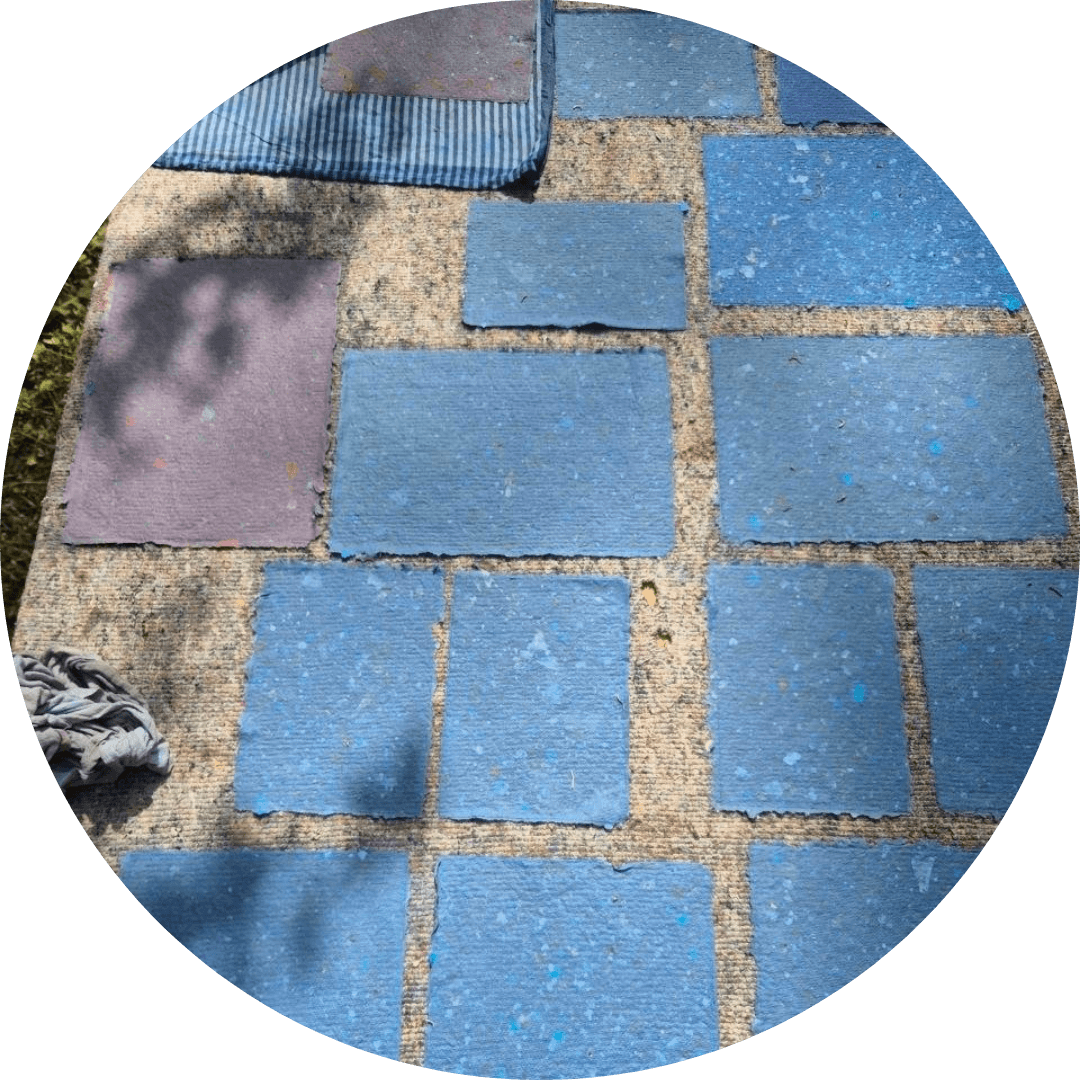
Lin (she/none)
Paper Making
read more...
How do we recycle and digest what we consume daily through media and headlines? As a collective practice, we tear apart fragments of our media reality. We dissolve headlines in water and create new paper from them. A transformative act in a very tactile and simple way. On this paper, there is space for new thoughts, seeds, and images that make another reality possible. Throughout the festival, we will use the paper to weave together written texts, ideas, and sketches within the Weaving Space as an immersive artwork. Digesting the world, creating, composting.
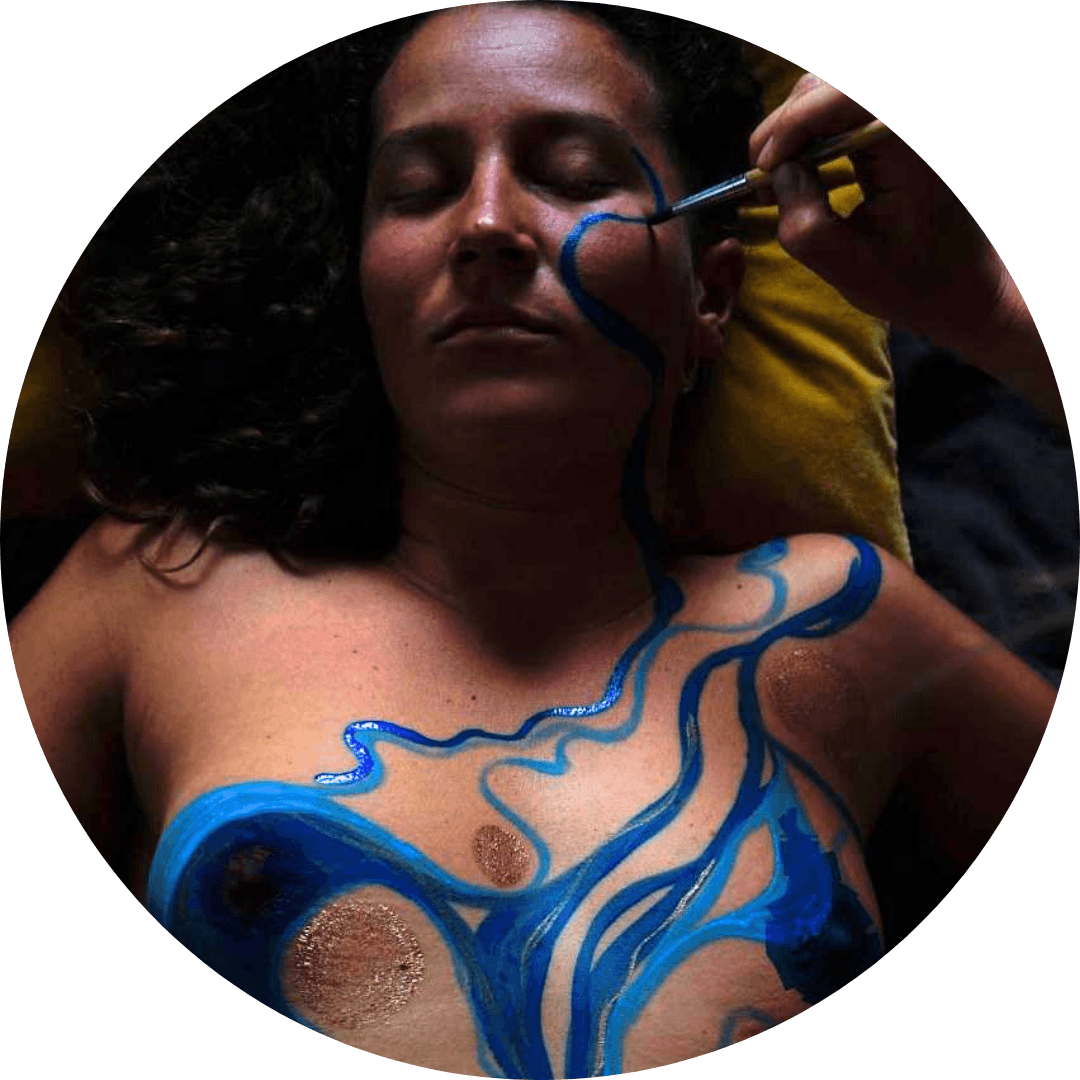
Lin (she/none)
Body paint
read more...
We paint our bodies and create photographs (if desired) to celebrate or disrupt beauty, break with norms, and view bodies in their diversity as pieces of art.
CN: there is a possibility of nudity.
Frodisa (she)
Open Stage
read more...
I invite you on a journey: a co-creative stage experiment!
Imagine the stage belongs to you. What have you always wanted to show? What part of yourself has longed to be seen?
The Open Stage is a place where we give ourselves permission to step into the spotlight. A place where we can share what we have always wanted to share. A place where our art is welcome to emerge – whether it is theatre, poetry, storytelling, music, dance, or performance. Loud or quiet. Polished or unfinished.
The Open Stage seeks to challenge social conventions and assumptions around visibility. It is a space for generous experimentation, for showing ourselves, for taking and giving space. I invite you to join a cozy evening of warm stage lights, mutual celebration, and courageous expression.
Together, we will create a spontaneous performance program for the evening – a space where different forms of expression can coexist. A space where we can learn that you do not become less visible, less valued, or less celebrated simply because someone else is also being seen and celebrated.
Martlis (she)
Process & Expression
read more...
Throughout the EMERGE Festival, you may have gathered a wide range of experiences, impressions, and encounters.
Most likely, you came looking for meaningful connection and hopefully, you found it.
Perhaps you discovered inspirations that feel transformative and meaningful for your life beyond the festival.
And maybe deeper inner processes have been stirred within you – processes that continue to move through you consciously and unconsciously, perhaps unsettling you, and calling for integration.
P&E is an experimental and experiential format that I developed for the creative integration of inner processes. It combines embodied self-exploration and expression through body, voice, and movement with verbal expression and the reflective power of language.